





Running a business in Singapore? Dealing with the Goods and Services Tax (GST) can be tricky. Even seasoned business owners can make common GST mistakes, given the complexities of GST regulations. These slip-ups can lead to penalties, GST audits, and wasted time. This article explores common GST mistakes and offers actionable strategies to avoid them.
We know even experienced business owners can face confusion and uncertainty when it comes to GST. So, aside from having a great accountant by your side, the key to success is staying informed and organised.
This article explores common GST mistakes and offers actionable strategies to avoid them. By the end of this post, you’ll have a better understanding of how GST works in Singapore, and what mistakes to watch out for.
Understanding common GST mistakes
The Inland Revenue Authority of Singapore (IRAS) sets the rules for GST. These rules cover everything from GST registration to claiming input tax credits. These resources give helpful and publicly available information.
One resource specifically addresses common GST mistakes made during the sale of non-residential properties, focusing on taxable supplies and output tax. Another resource provides guidance on correcting errors in your GST reporting, which is crucial for maintaining regular GST compliance and avoiding issues with tax authorities.
For small business owners navigating corporate tax and Singapore tax regulations, it’s essential to keep relevant supporting documents and stay informed with the latest GST updates. If you’re unsure about how to file GST returns or claim eligible input tax claims, don’t hesitate to consult a professional in tax accounting to ensure accuracy in your tax filing. Always keep your information and practices aligned with updated GST regulations set by the Singapore tax authorities to avoid penalties and ensure accuracy.
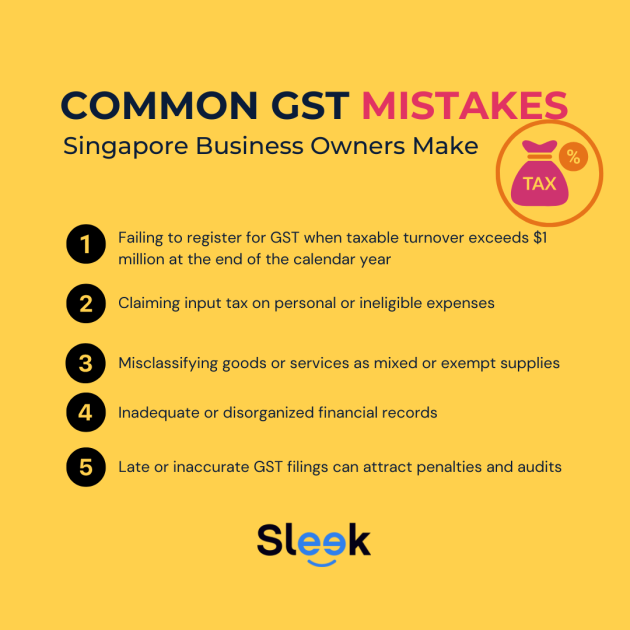
1. Failing to register for GST when taxable turnover exceeds $1 million at the end of the calendar year
Many small business owners struggle to understand when they must register for GST. The annual turnover of $1 million is the main requirement, but other factors exist. Not registering on time or registering late is problematic and can lead to penalties from IRAS.
If you expect your turnover to exceed $1 million soon, begin the GST registration process right away. Being proactive saves you potential stress. Ensure accurate GST registration for your small business. Make sure you are up to date with accurate record-keeping regarding tax claims.
2. Claiming input tax on personal or disallowed expenses
Input tax is the GST you pay on business purchases. You can usually claim this back to offset your output tax (the GST you charge your customers). However, it’s important to note that you cannot claim input tax on personal expenses or expenses that are not directly related to your business.
Common examples of disallowed expenses include:
- Entertainment expenses: While some entertainment expenses may be deductible, it’s crucial to ensure they are directly related to your business activities.
- Fines and penalties: These are generally not deductible for GST purposes.
- Personal expenses: Any expenses incurred for personal use, such as groceries or clothing, are not eligible for input tax claims.
To avoid claiming input tax on disallowed expenses, carefully review your business expenses and ensure they are directly related to your business operations.
3. Misclassifying goods or services as zero-rated or exempt supplies
A significant pitfall in GST compliance is the misclassification of standard-rated supplies as zero-rated or GST exempted. It’s essential to understand when to apply zero-rating, especially in scenarios involving exports.
Zero-Rating for Direct and Indirect Exports
Understanding these categories not only helps you comply with tax laws but also ensures that you benefit from GST zero-rating where applicable. Let’s delve into the specifics of these two critical classifications to help you manage your export transactions effectively.
Direct Exports
Zero-rating applies to direct exports if you manage the goods and control the export process. For zero-rating to be valid, you must keep the necessary documentation within 60 days after the export. This includes situations where goods are exported via your appointed freight forwarder, handling agent, postal service, or courier company. Whether you invoice an overseas or a local customer directing the export, the key is your control and custody over the goods until they leave the country.
Indirect Exports
If you neither have custody nor control over the goods being exported, the supply typically must be treated as a local standard-rated supply, which involves charging GST at the current rate of 9%. However, exceptions exist where you can zero-rate the supply. This is permissible if, at the time of the supply, you are certain all goods will be exported and the necessary supporting documents are obtainable within 60 days.
Time of Supply Rules
The time of supply, important for determining the GST treatment, occurs at the earlier of the invoice issuance or the receipt of payment. These details are crucial for ensuring that GST is applied correctly to prevent costly mistakes.
4. Record keeping practices
Proper financial records save time and trouble. Disorganised or incomplete records is a common GST mistake, especially for those new to the regulations. Maintaining proper records is essential for managing goods and services subject to GST. Keep this in mind when filing GST returns.
Good accounting software like Xero or Hubdoc simplifies record keeping. Use cloud storage for secure access to invoices, receipts, and credit notes. Organised records are crucial during an IRAS audit.
Use apps to photograph and upload receipts directly to your records. Having a solid understanding of record-keeping practices and claiming input tax is essential for any small business. It helps to stay informed about changes to GST rules.
5. Late or inaccurate GST returns
Inaccurate or late GST return filings are another issue. This stems from lack of time and management or insufficient understanding of regulations. Rushing leads to errors, giving incorrect information to authorities and prompting audits.
Late filing leads to penalties from IRAS. You can change your filing frequency through MyIR. Mark your calendar and set email reminders.
GST computational software helps if filing is overwhelming. These provide guidance based on updated rules to minimise manual errors. Properly filing your GST returns is crucial for GST compliance in Singapore. Make sure you also keep track of the input tax you’ve paid.
Staying updated and seeking help to prevent common GST mistakes
Singapore’s GST regulations often change, making it essential to stay updated. Check IRAS for the latest information to ensure you’re filing your GST returns correctly and understanding input tax credits. Regularly reviewing your financial records is critical for maintaining accuracy. If managing GST seems overwhelming, consider seeking expert help.
Don’t let GST complexities slow down your business. Our qualified accountants at Sleek specialise in GST matters and can assist you in managing your filings efficiently. Utilise our technology and expertise to ensure compliance and optimise your tax obligations. Contact us today to learn how we can simplify GST for your business.
Conclusion
Managing GST in Singapore comes with its challenges, including common mistakes and the necessity for efficient record-keeping to mitigate stress and penalties. By staying organized and using professional services, you’re better equipped for GST audits and keeping crucial supporting documents. Moreover, staying current with GST regulations and utilizing technologies like cloud-based services and updated accounting software aid in accurate submissions and maximizing input tax credits.
To avoid common GST mistakes, it’s vital to keep informed and organized. Employ advanced accounting software and seek professional advice to ensure precise documentation and minimize human errors. Regular reviews of GST matters not only help you comply with the latest regulations but also improve your capability to claim input tax credits effectively. Rely on the expertise of tax professionals to maintain proper financial records and manage the GST landscape confidently.
FAQs about the common GST mistakes Singapore business owners make
When do I need to register for GST in Singapore?
This is a very common question for new and growing businesses. The simplest answer is that if your annual taxable turnover exceeds (or is likely to exceed) S$1 million, you must register for GST.
However, there are nuances to this. For example, you can voluntarily register even if you don’t meet the threshold. When a business in Singapore opts for voluntary GST registration, its GST-registered customers benefit substantially. These customers can claim the GST they pay on their purchases as input tax credits, which reduces their actual costs. This capability not only enhances their cash flow and profitability but also streamlines their accounting procedures.
What are the common mistakes when claiming input tax?
Input tax claims are a major area where errors occur. Some common mistakes include:
- Claiming GST on non-business expenses: You can only claim GST on goods and services directly used for your business.
- Not having proper documentation: Valid tax invoices are crucial for supporting your claims.
- Claiming input tax on disallowed items: Certain expenses, like entertainment, have restrictions on GST claims.
- Incorrectly apportioning input tax: If you use goods and services for both business and non-business purposes, you need to apportion the claimable input tax accordingly.
How do I avoid errors when issuing tax invoices?
Accurate tax invoices are essential for both you and your customers. Key things to remember include:
- Mandatory information: Ensure your invoices include all the required details, such as your company name and GST registration number, the invoice date, and a description of the goods or services.
- Clearly stating GST: The amount of GST charged should be clearly displayed.
- Timely issuance: Issue invoices promptly after supplying goods or services.
What are the penalties for GST mistakes?
The penalties for GST mistakes can be severe. They include:
- Financial penalties: Fines can be imposed for late GST filing, incorrect returns, and other errors.
- Prosecution: In serious cases, businesses may face prosecution.
It’s crucial to understand your GST obligations and take steps to avoid mistakes. If you’re unsure about any aspect of GST, it’s always best to seek professional advice.

When does your company fall under the 0% GST rate?


450,000
businesses worldwide.


from 4,100+ reviews.