







- ESG reporting in Hong Kong is listing-driven, not universal. It applies through the HKEX ESG Reporting Code (Appendix C2), not through a general rule for every private company.
- Scope 1 and Scope 2 GHG emissions became mandatory for all Main Board and GEM issuers for financial years commencing on or after 1 January 2025.
- Main Board issuers report the wider Part D climate requirements on a “comply or explain” basis from FY 2025.
- Hang Seng Composite LargeCap Index (HSCLI) constituents must report Part D on a mandatory basis for financial years commencing on or after 1 January 2026, with first reports typically published in 2027.
- Hong Kong’s roadmap points large publicly accountable entities (PAEs) toward full ISSB-aligned HKFRS S1 and S2 adoption no later than 2028.
- Private companies are usually outside the Code, but listed customers, lenders and IPO plans increasingly demand the same data.





- Who must report: all HKEX-listed Main Board and GEM issuers, under Appendix C2 of the Listing Rules.
- What is mandatory now: Scope 1 and Scope 2 GHG emissions, for financial years commencing on or after 1 January 2025.
- What changes in 2026: HSCLI Large Cap constituents move to mandatory Part D climate disclosure, with first reports typically published in 2027.
- When it is published: at the same time as the annual report, which means within four months of financial year-end for most Main Board issuers.
- Do private companies file: no HKEX obligation by default, but supply-chain, lender and IPO demands still apply.
ESG reporting in Hong Kong is the mandatory annual disclosure of Environmental, Social and Governance performance that all companies listed on the Hong Kong Exchanges and Clearing (HKEX) Main Board and GEM must publish under the ESG Reporting Code in Appendix C2 of the Listing Rules. Private Hong Kong companies are not covered by default.
The single most important date right now: for financial years commencing on or after 1 January 2025, every Main Board and GEM issuer must disclose Scope 1 and Scope 2 greenhouse gas (GHG) emissions on a mandatory basis. Everything else in the climate rules is phased by issuer category.
This guide sets out exactly who must report, what the 2025 and 2026 climate deadlines are, what belongs in the report, and which records finance teams need to support it.

Xero is a third-party product. Features and prices below are drawn from Xero's official Hong Kong site as of 22 July 2026 and should be re-checked before you buy.
What is ESG reporting in Hong Kong?
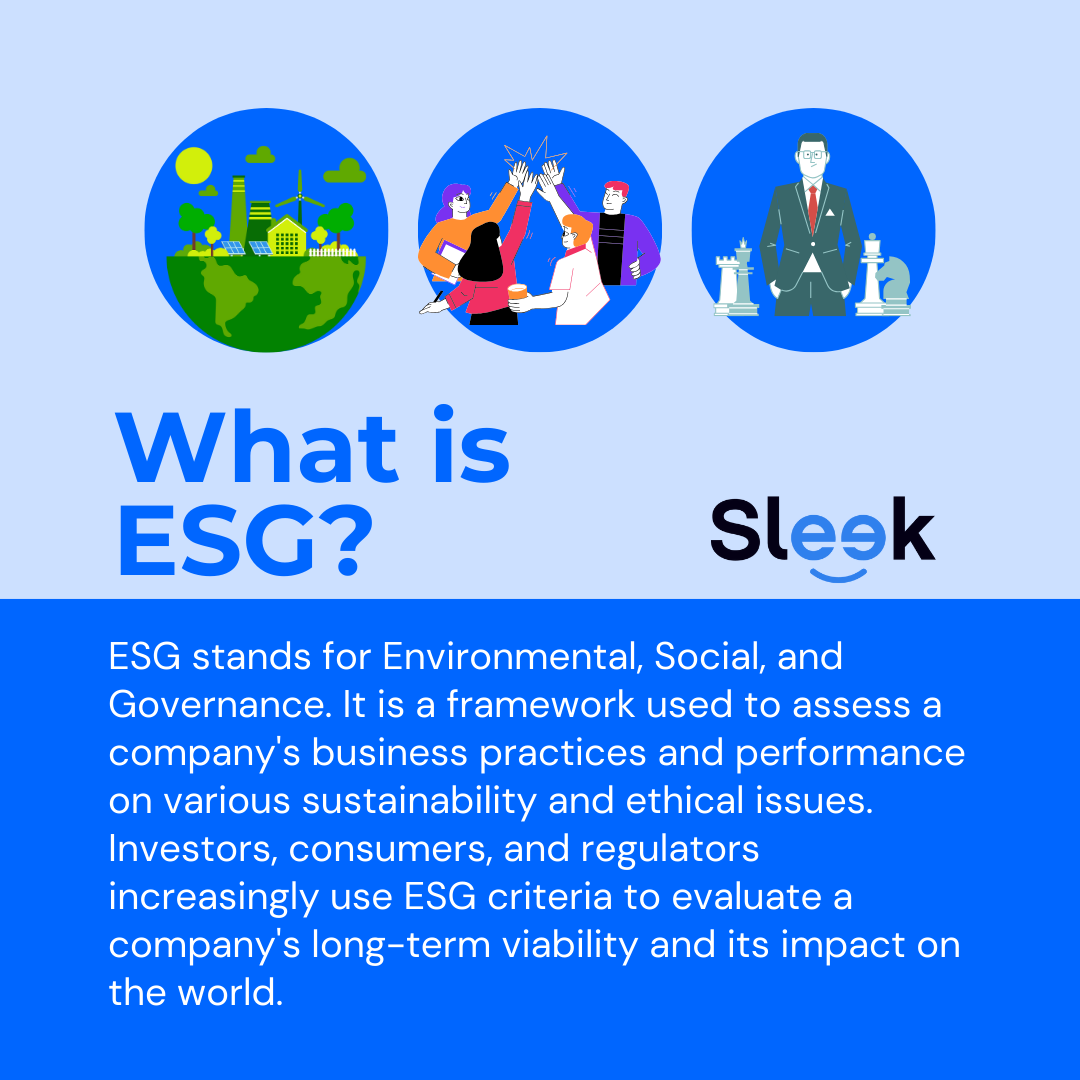
The Code combines three types of requirement:
- Mandatory disclosures, including a board-level governance statement on ESG oversight.
- “Comply or explain” KPIs, where omission requires considered reasons rather than silence.
- A climate chapter (Part D), modelled on IFRS S2 Climate-related Disclosures issued by the International Sustainability Standards Board (ISSB).
ESG reporting is a description of how a company makes money and manages risk, not a corporate social responsibility brochure attached at year-end. That distinction drives what regulators and investors actually read.

Who needs to do ESG reporting in Hong Kong?
Every company listed on the HKEX Main Board or GEM must publish an ESG report covering the same period as its annual report. The report may sit inside the annual report or stand as a separate document, and it must appear on both the Exchange website and the issuer’s own website.
Private limited companies in Hong Kong are not automatically subject to the HKEX ESG Code. You may still need ESG-ready data if you:
- Supply a listed group that requests supplier emissions or labour data
- Seek green or sustainability-linked finance
- Bid for contracts that score suppliers on emissions and labour practices
- Plan an IPO and need listing-ready controls
What is the HKEX climate disclosure timeline for 2025 and 2026?
HKEX phased its 2024 climate amendments by issuer category. The dates below refer to financial years commencing on or after those dates.
|
Requirement |
Main Board issuers |
GEM issuers |
HSCLI Large Cap issuers |
|---|---|---|---|
|
Scope 1 and Scope 2 GHG emissions |
Mandatory from 1 Jan 2025 |
Mandatory from 1 Jan 2025 |
Mandatory from 1 Jan 2025 |
|
Other Part D climate disclosures |
“Comply or explain” from 1 Jan 2025 |
Encouraged / voluntary from 1 Jan 2025 |
“Comply or explain” from 1 Jan 2025; mandatory from 1 Jan 2026 |
Two details issuers most often get wrong:
- Large Cap status is not a single-day test. Mandatory Part D for FY 2026 applies to issuers that were HSCLI constituents throughout the year immediately before the reporting year. Once mandatory Part D applies, it continues even if the issuer later leaves the index.
- Publication timing is fixed to the annual report. The ESG report must be published at the same time as the annual report. Main Board annual reports are due within four months of financial year-end, which is therefore the practical ESG deadline for most Main Board issuers.
An ESG report prepared in accordance with IFRS S1 and IFRS S2 is treated as complying with Part D of the HKEX ESG Code. That matters if your group already reports to ISSB standards for overseas investors and wants one climate pack instead of two.
Where does Hong Kong ESG regulation go next?
In December 2024, the HKSAR Government published its Roadmap on Sustainability Disclosure in Hong Kong, setting the expectation that large publicly accountable entities fully adopt ISSB-aligned standards no later than 2028.
The sequence is:
- 1 August 2025: HKFRS S1 and HKFRS S2, issued by the Hong Kong Institute of Certified Public Accountants (HKICPA) and fully aligned with the ISSB Standards, take effect for application as Hong Kong sustainability disclosure standards.
- 2027: HKEX is expected to consult on mandating the Hong Kong Standards for listed PAEs.
- 1 January 2028: expected effective date for listed PAEs under a proportionate approach.
Today’s HKEX climate rules are the bridge; 2028 is the destination for large publicly accountable entities.
What do you need to disclose in an ESG report?
You disclose material information across Environmental, Social and Governance topics, plus climate-related information under Part D where your issuer category requires it.
Materiality is a board judgment: an issue is material when it is important enough to investors and other stakeholders that it should be reported.
Environmental (E) disclosures
Cover how operations affect the natural environment, and how climate change could affect cash flows, access to finance or cost of capital.
- Climate-related risks and opportunities: physical risks such as typhoons, and transition risks such as carbon costs or product shifts
- GHG emissions: Scope 1 (direct), Scope 2 (purchased energy), and a plan toward Scope 3 (value chain) where required or material
- Resource management: energy, water and waste, with targets where the Code expects them on a “comply or explain” basis
Social (S) disclosures
Cover relationships with employees, customers, communities and suppliers.
- Workforce data: pay fairness themes, health and safety, training, diversity
- Supply chain: ESG risk management and ethical sourcing expectations
- Business ethics: anti-bribery and corruption policies, training, and whistle-blowing channels
Governance (G) disclosures
Cover how leadership owns ESG, not merely who drafted the document. The board statement should address:
- Board oversight of ESG issues
- The board’s ESG management approach and strategy, including how material issues are prioritised
- How the board reviews progress against ESG-related goals and targets
For Part D climate disclosures, expect additional detail on governance processes, controls, and monitoring of climate-related risks and opportunities.
Why does ESG reporting matter for Hong Kong companies?
For listed issuers, ESG reporting is a Listing Rule obligation, so weak or missing disclosure is a regulatory and reputational risk rather than a missed marketing opportunity.
Three concrete effects:
- Capital access. Investors and lenders use ESG data to price risk and allocate capital. Clear climate and governance disclosure can improve financing terms and reduce repeated diligence requests.
- Operational insight. The work usually surfaces cost leaks: energy waste, high turnover, supplier concentration, or poor incident logging.
- Durable controls. The report is the output; the reporting control system is the lasting value.
Which sectors face the most ESG pressure in Hong Kong?
Sectors with heavy emissions, large property footprints, or complex supply chains attract the sharpest investor and regulator attention.
|
Sector |
Primary ESG focus |
Main risk |
|---|---|---|
|
Financial services |
Financed emissions, transition plans |
Greenwashing when product labels outrun portfolio data |
|
Real estate and construction |
Physical climate risk, embodied carbon, building efficiency |
Buildings drive a large share of Hong Kong’s energy use |
|
Energy and utilities |
Fuel mix sits directly in Scope 1 |
Transition plan credibility and reliability |
|
Manufacturing and retail |
Factory energy intensity, Scope 3 supply chain |
Labour standards and packaging waste scrutiny |
How do you comply with Hong Kong’s ESG reporting rules?
Treat ESG reporting as a controlled, year-round process rather than a final-month writing project. These ten steps reflect how finance teams typically sequence the work:
- Map your obligations. Confirm whether you are Main Board, GEM, or an HSCLI Large Cap issuer for the reporting year, and list mandatory versus “comply or explain” items.
- Assign board and management ownership. Name who owns climate and ESG oversight, and set the board review cadence.
- Run materiality. Identify the climate and ESG issues that could reasonably affect cash flows, financing or stakeholder decisions.
- Measure Scope 1 and Scope 2 first. Build a repeatable emissions inventory with documented methods, for example the GHG Protocol.
- Document scenarios and risks. Cover physical and transition scenarios relevant to your business model, even if quantification begins qualitatively.
- Set targets and an action plan. Link targets to capital spend, named owners and dates.
- Connect climate to financial impact. Explain effects on revenue, costs, assets or financing in numbers where possible, and in clear narrative where you cannot yet quantify.
- Plan Scope 3. Identify the value-chain categories that matter, especially where customers or investors already ask.
- Prepare for assurance readiness. Independent assurance is encouraged rather than universally mandatory, but keep workpapers audit-ready regardless.
- Publish with the annual report. Align narrative, KPIs and board statements with the financial reporting package.
What records do you need for an ESG report?
You do not need a single ESG folder. You need consistent operational and finance evidence that supports every KPI and climate number.
|
Pillar |
Records to keep |
|---|---|
|
Environmental |
Electricity and water bills with meter readings by site; fuel logs and vehicle or generator records for Scope 1; waste and recycling invoices; environmental permits |
|
Social |
HR records for headcount, turnover, training and diversity; health and safety incident logs; supplier contracts with ESG clauses; whistle-blowing and anti-corruption case logs |
|
Governance |
Board minutes showing ESG and climate discussion; risk registers including ESG items; code of conduct and anti-bribery procedures |

The hardest ESG gap is rarely the report template. It is broken source data: utility bills sitting in personal inboxes, fuel cards with no cost centre, and HR metrics that do not match the consolidation boundary used in the audit. Fix the boundary and the data owners before you hire a designer.
What are the most common mistakes in Hong Kong ESG reports?
- Treating “comply or explain” as “skip quietly.” The Code expects considered reasons for omission. Empty explanations attract follow-up from the Exchange and from investors.
- Mixing reporting boundaries. If your financial statements consolidate an entity but your emissions inventory excludes its factories, readers will spot the mismatch. Align ESG boundaries with your financials or explain the difference.
- Publishing Scope 1 and Scope 2 without a method note. Numbers without standards, emission factors and assumptions are difficult to defend.
- Collecting data only after year-end. ESG evidence accumulates all year. A post-year-end scramble produces estimates you cannot re-perform.
- Overclaiming green credentials. Greenwashing risk is real in financial products, packaging claims and net-zero slogans. If you cannot evidence a claim, remove it.
How Sleek supports the finance side of ESG reporting
ESG reports rest on operational and financial evidence. Sleek helps Hong Kong companies keep that evidence usable through accounting and bookkeeping, audit support, and company secretary discipline, so board minutes, filings and statutory records stay in order. Consistent bookkeeping duties during the year matter more than a last-minute KPI spreadsheet.
With Sleek, you can:
- Keep source data tidy: utility, payroll and expense trails that finance can re-perform
- Align year-end packs: books that match the consolidation boundary your ESG team reports against
- Support governance hygiene: company secretarial support for board processes and statutory records
- Stay listing-adjacent ready: cleaner foundations if you are moving toward IPO-level reporting expectations
Sleek strengthens the finance and compliance base that ESG specialists build on; it does not replace your ESG consultant or assurance firm.



450,000
businesses worldwide.


from 4,100+ reviews.

satisfaction rate from
16,000 surveyed clients.
FAQs about ESG reporting in Hong Kong
View more