Lydia Chin, a Singapore-based Payroll and GST Compliance Manager, brings over 5 years of industry expertise. Her certifications include:
Bachelor of Science (B.Sc.) Hons, Business and Management
Accredited Tax Practitioner (Provisional) (PTP)
Accredited Tax Practitioner (ATP) - Pursuing
At Sleek, Lydia specializes in managing payroll and GST processes for SMEs and sole proprietors. Lydia also conduct webinars and consultancy sessions to external stakeholders. She enjoys helping these business owners to understand accounting, payroll & GST concepts. In so doing, this empowers business owners to focus on growing their businesses while leaving the numbers to her and her team.
One of Lydia's greatest work satisfaction is to see happy clients trusting her team - such as by leaving good feedback / reviews.
In her spare time, Lydia enjoys singing, drawing and reading.
In short: verifying GST registration protects both your cash flow and your tax position.
In this guide, you’ll learn how to:
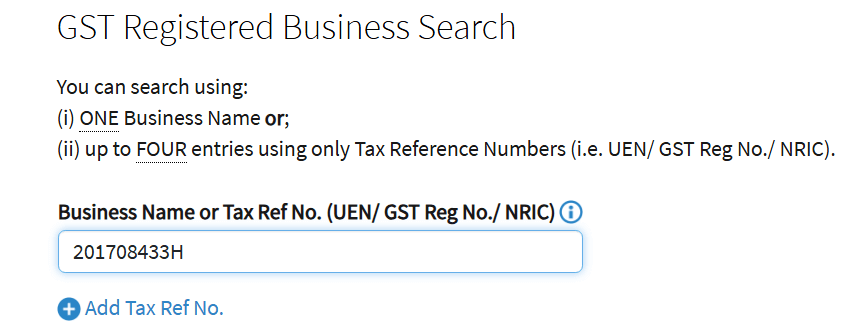
Check if a business is GST-registered using the IRAS GST Registered Business Search
Identify warning signs on invoices and receipts
Take the right action if a supplier’s GST status looks suspicious
What is GST registration?
GST registration means your business is officially registered with IRAS to charge and report Goods and Services Tax (GST) on taxable supplies.
Once registered, your business is required to charge GST on sales, submit regular GST returns, and comply with ongoing tax obligations set by IRAS.
You must also issue GST-compliant invoices, file returns (typically quarterly), and maintain proper records for at least five years.
Insights
A simple GST registration check helps you avoid unnecessary costs, stay compliant with IRAS, and maintain trust in your business operations.
Why does a GST registration check matter?
A GST registration check is more than a routine verification. It directly impacts your costs, compliance, and business credibility.
1. Avoid overpaying for goods and services
If a supplier is not GST-registered but still charges GST, that amount is not legally payable. This means you’re effectively overpaying, with no way to recover the excess. Over time, these small errors can significantly increase your operating costs.
2. Ensure your input tax claims are valid
Under IRAS rules, you can only claim input tax on purchases made from properly GST-registered businesses. If you claim GST from an unregistered supplier, your claim may be rejected during an audit, potentially resulting in repayments, penalties, or additional scrutiny.
3. Stay compliant and reduce audit risk
Incorrect GST claims or reliance on non-compliant suppliers can expose your business to regulatory risk. IRAS has been increasing enforcement and data checks, making it more important than ever to verify GST status before processing invoices.
4. Protect your business reputation
For businesses, GST registration is often seen as a sign of legitimacy and scale. Working with verified, GST-registered suppliers and ensuring your own status is accurate helps build trust with clients, partners, and stakeholders.
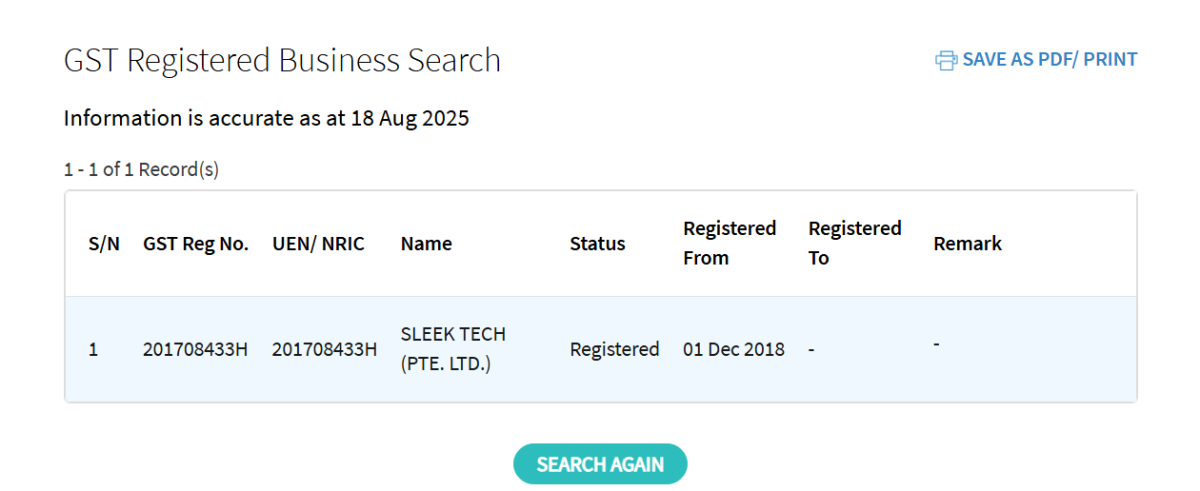
The tool will show if the business is GST-registered and the date their registration took effect.
GST registration verification Singapore
Pro tip: Print or save the result as a PDF. It’s handy proof of due diligence if IRAS ever audits you.
2. Look at the invoice
A proper GST invoice should clearly display:
The supplier’s GST registration number
The GST amount charged
The total price, including GST
If GST is charged but no GST number appears, treat it as a red flag.
3. Ask directly (and document it)
You can also just ask the supplier. If they confirm their registration their GST number must be shown on the invoice. Keep these records for IRAS audits.
4. Request the GST registration certificate
Every GST-registered business in Singapore receives a certificate from IRAS as proof of registration. You can request to see it, especially if you’re working with a new supplier. The certificate will show their GST registration number and the effective registration date.
When you are still unsure, the best step is to contact IRAS directly by hotline or email to confirm the company’s registration status.
What happens if you register for GST late?
Late GST registration is one of the most common and costly mistakes growing businesses make in Singapore.
If your business crosses the registration threshold but fails to register on time, IRAS can take corrective action that goes beyond a simple penalty.
Backdated GST registration
IRAS may backdate your GST registration to the date when you should have been registered. This means your business is treated as if it had been GST-registered from that earlier date.
You must pay GST on past revenue
Once backdated, you are required to account for GST on all taxable sales made during that period, even if you did not charge GST to your customers at the time.
In practice, this often means:
You cannot recover GST from past customers
The GST payable must be absorbed by your business
Your profit margins are directly impacted
Financial penalties and interest
In addition to the GST owed, IRAS may impose:
Late payment penalties for unpaid GST
Fines for non-compliance
Interest on overdue amounts
These costs can accumulate quickly, especially if the delay spans several months.
Increased audit and compliance scrutiny
Late registration can also trigger closer monitoring by IRAS, including:
Higher likelihood of audits
More frequent reviews of GST filings
Requests for additional documentation
This can increase your administrative burden and disrupt operations.
Late GST registration doesn’t just result in penalties; it can create significant cash flow strain, reduce profitability, and expose your business to ongoing compliance risks.
Common red flags during a GST registration check and what to do next
A GST registration check matters, but it is equally important to know how to respond when you notice something suspicious. If something feels off, chances are it is.
Common warning signs
Mismatched names: If the business name on the invoice is not the same as the name on the IRAS GST register, be careful. Small spelling errors are normal, but very different names are a serious issue.
Charging GST without registration: A company adds GST to invoices but cannot be found on the IRAS register.
Suspended or de-registered on IRAS: The IRAS GST register shows “De-registered” or “Suspended,” yet the business continues to charge GST.
Incomplete invoices: Missing key details like a UEN, GST number, or business address.
Suspicious contact details: Business contacts that seem unreliable or not connected to a real company.
What to do if you spot issues
Contact the supplier and highlight the error. Often, it’s just a simple mistake, and they can issue a corrected invoice.
Do not pay the GST if the supplier cannot provide a valid GST number or refuses to fix the issue. Request a revised invoice without GST.
Reassess the relationship if the supplier resists providing proof or correcting mistakes
Report suspected fraud to IRAS through their official tax evasion reporting process. This protects your business and the wider community.
How Sleek helps you with GST registration check and beyond
A GST registration check in Singapore takes only minutes, but it protects you from mistakes like paying GST to a non-registered supplier.
Sleek makes this process simple. Our team helps you:
Verify suppliers and partners to confirm if they are GST-registered
Check and confirm your own GST registration status with IRAS
Advise whether you should register or deregister based on turnover and business plans
Beyond the GST registration check, many SMEs struggle with eligibility rules, worry about penalties, and lose valuable time to admin tasks. Sleek makes it simple with:
Fast registration – Get your GST application sorted quickly and compliantly
Hassle-free filing – Monthly or quarterly GST returns submitted on time
No penalty stress – Nil returns filed when required
Expert advice – Guidance on voluntary registration or GST deregistration
Spend less time worrying about GST and more time winning customers.
How do I check if a business is GST-registered in Singapore?
You can verify a business’s GST status using the IRAS GST Registered Business Search by entering its UEN or company name. The system will show whether the business is registered and the effective date. This is the most reliable way to confirm legitimacy before paying GST on any invoice.
Can I claim GST from an unregistered supplier in Singapore?
No, you cannot claim input tax on purchases from a supplier that is not GST-registered. IRAS requires valid GST registration for all input tax claims. If you claim GST incorrectly, your claim may be rejected during audits, potentially leading to repayments, penalties, and increased scrutiny from tax authorities.
What should I do if a supplier charges GST without being registered in Singapore?
If a supplier charges GST but is not registered, you should request clarification and a corrected invoice without GST. Do not pay the GST portion unless valid registration is confirmed. If the supplier refuses to cooperate, consider reassessing the relationship or reporting the issue to IRAS.
What happens if my business registers for GST late in Singapore?
If you register late, IRAS may backdate your registration and require you to pay GST on past revenue, even if you didn’t collect it from customers. This can impact your cash flow and profitability. Additional penalties, interest charges, and audit risks may also apply depending on the delay.
Is GST registration mandatory for all businesses in Singapore?
GST registration is only mandatory if your taxable turnover exceeds S$1 million or is expected to exceed that amount. However, businesses can choose voluntary registration if it benefits them, such as claiming input tax or improving credibility with clients, especially in B2B environments.