Ismarina is the Head of Country at Sleek Singapore, where she leads strategic growth, operational excellence, and service delivery. With over 20 years of experience across finance, compliance, and business leadership, she oversees Sleek’s full range of services. These include CFO advisory, accounting, tax, GST, payroll, corporate secretarial, immigration, and client support.
She is known for her clarity in leadership and strength in execution. Ismarina has led large, cross-functional teams in both in-person and virtual settings. She has delivered strong P&L outcomes, scaled operations, and built trusted relationships across businesses of all sizes.
Ismarina combines practical insight with academic depth. She holds an MSc (Hons) in Management, is a Fellow CPA, an ASEAN CPA, and a CIMA-qualified Chartered Global Management Accountant. Her expertise covers project management, construction and nonprofit accounting, judicial management, and liquidation. Her experience running an accounting firm and offering CFO services gives her a sharp understanding of what clients need to grow and stay ahead.
She is also a committed mentor who supports her team’s growth with care and purpose. Before Sleek, she held senior roles at the Project Management Institute and the Football Association of Singapore. She played a key role in leading digital transformation and shaping regional strategy.
Outside of work, you’ll find her immersed in books, sewing projects, and knitting, or cheering on her family at sporting events. She brings the same passion for excellence to everything she does, both professionally and personally.
96% customer satisfaction from 16,000+ survey responses.
In this article
Share this post
Facebook
LinkedIn
WhatsApp
Copy to clipboard
Key takeaways
A Singapore company's statutory set is six statements: financial position, comprehensive income, changes in equity, cash flows, notes, and a directors' statement.
You prepare them under full SFRS, or under SFRS for Small Entities if you're not publicly accountable and meet two of three size tests. An audit is required unless your company qualifies for small-company exemption, and that exemption is re-tested every year.
Most companies file with ACRA in XBRL; smaller companies (revenue and assets each S$500,000 or less) file Simplified XBRL plus a PDF.
Skip the bank queue. Open your account from anywhere.
The types of financial statements a Singapore company must prepare are set by the Companies Act and the Singapore Financial Reporting Standards, not by preference. There’s a defined set of statements; most companies file them with ACRA in XBRL through their annual return, and anything above the audit-exemption thresholds has to be audited first. Get the framework or the filing format wrong, and you’re doing it twice.
Not sure exactly which statements your company must prepare, whether they need auditing, or where your job ends and your accountant’s begins?
What financial statements must a Singapore company prepare?
Every Singapore company must prepare a full set of financial statements for each financial year, drawn up under the Singapore Financial Reporting Standards (SFRS). The set is the same six components whether you’re a two-person consultancy or a funded startup, and the directors are legally responsible for it under the Companies Act.
Here’s the statutory set, and what each part is for.
The statutory financial statements a Singapore company must prepare
Financial statement
What it reports
Must it be audited?
How it’s filed
Statement of financial position (balance sheet)
What the company owns and owes, and the equity left over, at year-end
Yes, unless audit-exempt
ACRA, in XBRL; feeds the IRAS tax return
Statement of comprehensive income (profit and loss)
Income, expenses and the profit or loss for the year
Yes, unless audit-exempt
ACRA, in XBRL; feeds IRAS
Statement of changes in equity
How share capital, reserves and retained earnings moved during the year
Yes, unless audit-exempt
ACRA, in XBRL
Statement of cash flows
Actual cash in and out, split by operating, investing and financing activity
Yes, unless audit-exempt
ACRA, in XBRL
Notes to the financial statements
Accounting policies and the detail behind the headline numbers
Yes, unless audit-exempt
ACRA, in XBRL or PDF
Directors’ statement
The directors’ declaration that the accounts are true and fair and the company can pay its debts
Signed, not audited
ACRA, as part of the set
Most founders don’t draw these up by hand. Ongoing accounting services in Singapore produce the full SFRS set as part of your monthly close, so year-end is a review rather than a scramble. What matters first is knowing the set exists and that all six parts are mandatory, even for a company with almost no activity.
Which framework applies: SFRS or SFRS for Small Entities?
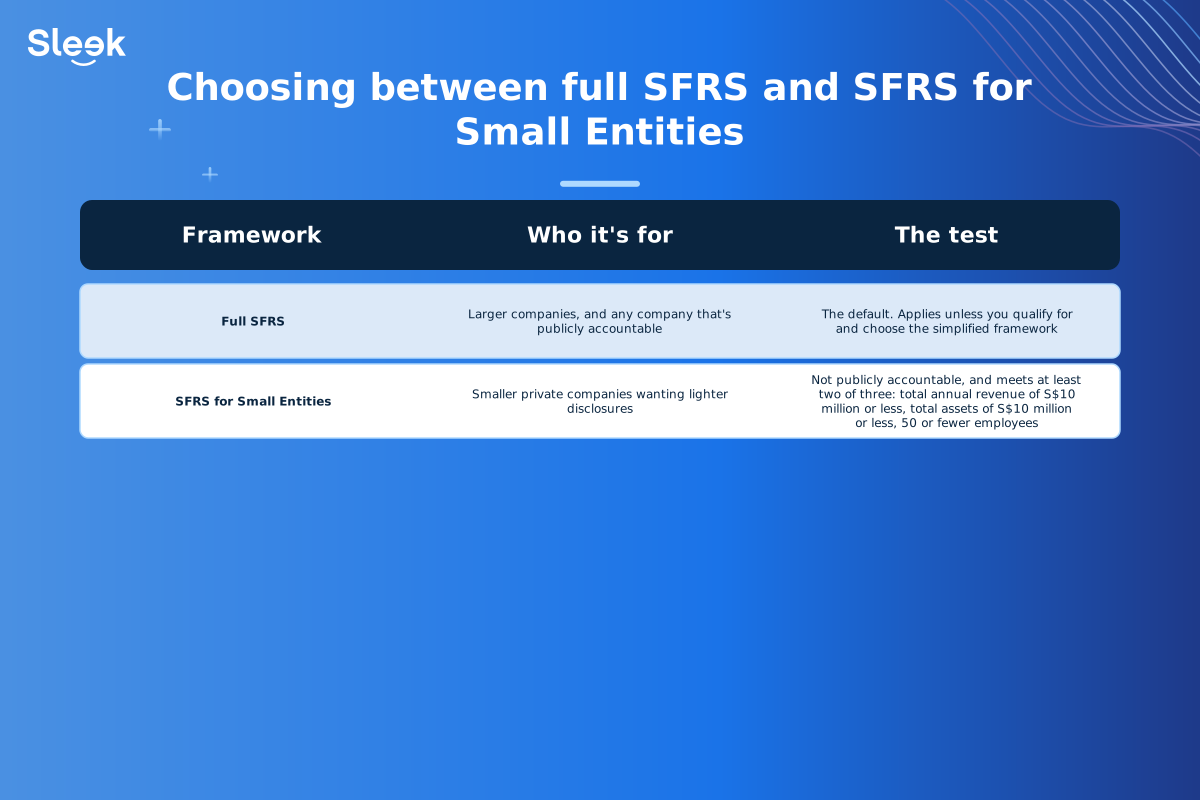
Singapore has two reporting frameworks, and picking the right one is a real decision, not a formality. Full SFRS is the default. SFRS for Small Entities is a lighter framework with fewer disclosure requirements, built for smaller private companies that don’t need the full apparatus.
You can use SFRS for Small Entities if your company isn’t publicly accountable (it isn’t listed and isn’t a bank, insurer or other financial institution) and it qualifies as a small entity.
Choosing between full SFRS and SFRS for Small Entities
Framework
Who it’s for
The test
Full SFRS
Larger companies, and any company that’s publicly accountable
The default. Applies unless you qualify for and choose the simplified framework
Not publicly accountable, and meets at least two of three: total annual revenue of S$10 million or less, total assets of S$10 million or less, 50 or fewer employees
The simpler framework can cut the length of your notes considerably, which is where most of the preparation cost sits. The honest catch: choosing the wrong framework, or switching frameworks without applying the transition rules, is one of the harder things to unwind later. This is a call worth making with an accountant before your first set is prepared, not after.
Getting the framework or the XBRL template wrong means refiling with ACRA.
Sleek prepares your financial statements under the right SFRS framework and files them in the correct format the first time.
The six statements aren’t interchangeable. Each answers a different question, and together they give the full picture ACRA, IRAS and your shareholders expect.
Statement of financial position (balance sheet)
A snapshot on the last day of your financial year: assets on one side, liabilities and equity on the other, always in balance. It tells you what the company is worth on paper and how much of that is funded by debt versus the owners.
Statement of comprehensive income (profit and loss)
This covers the whole year rather than a single day: revenue earned, costs incurred, and the profit or loss that’s left. It’s the statement most founders instinctively care about, and the one IRAS starts from when working out tax.
Statement of changes in equity
Often the shortest statement, and the one people forget. It reconciles your opening and closing equity, showing new shares issued, dividends paid, and profit retained. Investors read it closely because it shows exactly what happened to their stake.
Statement of cash flows
Profit and cash aren’t the same thing, and this statement explains the gap. It splits cash movements into operating, investing and financing, so a profitable company that’s quietly running out of cash shows up here first. It’s required under both frameworks. If it’s new to you, the statement of cash flows covers how it’s built.
Notes to the financial statements
The notes carry your accounting policies and the breakdowns behind the summary figures, from how you recognise revenue to what sits inside “other payables”. Under full SFRS they can run to many pages. SFRS for Small Entities is where the notes get materially shorter.
Directors’ statement
Not an accounting statement but a legal one. The directors sign to confirm the accounts give a true and fair view and that the company can reasonably pay its debts. It isn’t audited, but signing it carries real personal responsibility.
Do your financial statements need to be audited, and what do you receive?
Not every company needs an audit. A private company is exempt if it qualifies as a “small company”, which means meeting at least two of three criteria in each of the last two financial years: annual revenue of S$10 million or less, total assets of S$10 million or less, and 50 or fewer employees. Companies that qualify prepare unaudited financial statements and skip the auditor entirely.
If you don’t qualify, you appoint a registered auditor, and what you receive at the end is an independent auditor’s report attached to the front of your statements, giving an opinion on whether they’re true and fair. That report is what banks, investors and some tenders ask to see. The full criteria and the group rules sit in audit exemption for small companies.
TIP
Tip: Audit exemption isn’t a permanent status. It’s a two-of-three test you re-check every year, and steady growth in revenue, assets or headcount can push you back into needing an audit before you’ve noticed you crossed the line.
What do dormant and first-year companies file?
Two situations change the picture, and both catch founders out.
A dormant company, one with no accounting transactions in the year, still exists in ACRA’s eyes and still files an annual return. Depending on how long it’s been dormant and its size, it may be exempt from preparing full financial statements, but “dormant” is a specific status with conditions, not simply “we didn’t trade much”.
A first-year company is different again. Your first financial period can run up to 18 months from incorporation, so your very first set of statements often covers more than a calendar year. The financial year end you choose at the start sets every downstream deadline, so it’s worth choosing deliberately rather than defaulting. Choosing your financial year end explains how that first period works.
Who must file in XBRL, and which template?
Most Singapore companies limited by shares file their financial statements with ACRA in XBRL, a structured data format, rather than as a plain PDF. Which template you use depends on your size and status, and getting this wrong is a common refiling trigger.
Which XBRL template you file with ACRA
Your company
What you file
Smaller, non-publicly accountable company, with revenue and total assets each of S$500,000 or less
Simplified XBRL, plus a PDF of the full financial statements
Most other companies limited by shares
Full XBRL
Solvent exempt private company (EPC)
Exempt from filing financial statements, though it may file voluntarily
Company limited by guarantee
PDF only, not XBRL
Full XBRL tags roughly 210 data elements; Simplified XBRL is about 120. Tagging your accounts correctly is fiddly and genuinely technical work, which is why most companies have their accountant or a filing agent handle it. If you want the mechanics, what XBRL is and how filing works covers the format, and XBRL filing services handle the tagging and submission for you.
How do your financial statements feed your tax filing?
Your statutory financial statements are the starting point for your corporate tax, so the two have to agree. IRAS works from your profit and loss to arrive at chargeable income, and any mismatch between what you filed with ACRA and what you filed with IRAS is exactly the kind of thing that surfaces in a query.
The sequence is straightforward once you see it. You file your Estimated Chargeable Income (ECI) within three months of your financial year end, then your full tax return on Form C-S, C-S (Lite) or C by 30 November, with tax charged at 17%. The annual return to ACRA runs on a separate track, due within seven months of your year end, and pulls from the same statements. Keeping the ACRA and IRAS filings aligned is what annual return filing is built to do.
Statutory statements, management accounts and investor reports: what’s the difference?
These three get lumped together, and they shouldn’t be. They serve different audiences and follow different rules.
Statutory financial statements are the SFRS-compliant set you file with ACRA and IRAS once a year. Management accounts are internal: monthly or quarterly, in whatever format helps you run the business, with no obligation to follow SFRS. Investor reports are different again, built around the metrics a funder cares about, such as recurring revenue, burn and runway, which don’t appear anywhere in your statutory accounts.
The practical point for a founder raising money: your statutory statements prove the company is compliant and solvent, but they won’t tell an investor the story your metrics do. You’ll usually need both.
Which parts can you do yourself, and which need an accountant?
An honest answer, because “do we handle the accounting, or do you?” is one of the first questions founders ask.
You can realistically own your own bookkeeping, keep your records tidy, and understand what each statement means. Where most directors genuinely need help is the judgement calls: choosing between full SFRS and SFRS for Small Entities, deciding whether you still qualify for audit exemption as you grow, and preparing and tagging the XBRL file correctly. None of those are things you want to get wrong on a statutory filing, and all three are where an accountant earns their fee. Everything downstream of a clean set of books is faster and cheaper when the books are actually clean.
What goes wrong when companies prepare their financial statements?
The failures repeat, and they’re avoidable.
Preparing under the wrong framework, then discovering the transition rules the hard way at year-end.
Assuming audit exemption still applies without re-running the two-of-three test after a year of growth.
Filing the wrong XBRL template, the single most common reason a set gets bounced and refiled.
Statements that don’t reconcile to the tax computation, so ACRA and IRAS see different numbers.
Forgetting the directors’ statement, which isn’t optional even for a tiny company.
Misapplying the first-year period, and treating an 18-month first set as if it were 12.
How Sleek helps you prepare and file your financial statements
Preparing statutory financial statements is really three jobs: producing an SFRS-compliant set, deciding whether it needs an audit, and filing it with ACRA in the right XBRL template. Sleek’s accounting and tax team handles the full set as part of your monthly close, flags the audit-exemption test before growth quietly trips it, and keeps the ACRA and IRAS filings aligned so the numbers agree. See how it fits together across accounting and tax.
Ready to hand off your financial statements?
Talk to Sleek about preparing and filing your company’s statutory accounts, from SFRS-compliant statements through to XBRL and the annual return.
FAQs: Types of Financial Statements a Singapore Company Must Prepare and File
What financial statements does a Singapore company need to prepare?
A full set of six: the statement of financial position, statement of comprehensive income, statement of changes in equity, statement of cash flows, notes to the financial statements, and a directors’ statement. They’re prepared under SFRS, and the directors are legally responsible for them regardless of how much the company traded.
Do my financial statements need to be audited?
Only if you don’t qualify for the small-company exemption. Your company is exempt if it’s private and meets at least two of three criteria in each of the last two financial years: revenue of S$10 million or less, total assets of S$10 million or less, and 50 or fewer employees. If you qualify, you file unaudited financial statements.
Which accounting standards apply, SFRS or SFRS for Small Entities?
Full SFRS is the default. You can use the lighter SFRS for Small Entities if your company isn’t publicly accountable and meets at least two of three size tests: revenue of S$10 million or less, total assets of S$10 million or less, and 50 or fewer employees. The main saving is much shorter notes.
Do I need to file my financial statements in XBRL, and which template?
Most companies limited by shares file in XBRL. If your revenue and total assets are each S$500,000 or less and you’re not publicly accountable, you file Simplified XBRL plus a PDF of the full statements. Otherwise, you file Full XBRL. Solvent-exempt private companies are exempt from filing altogether.
What does a dormant company have to file?
A dormant company still files an annual return with ACRA. Depending on how long it’s been dormant and its size, it may be exempt from preparing full financial statements, but dormancy is a defined status with conditions, so check you actually qualify rather than assuming low activity is enough.
What's the difference between statutory financial statements and management accounts?
Statutory financial statements are the SFRS-compliant set you file with ACRA and IRAS once a year. Management accounts are internal reports, usually monthly, in whatever format helps you run the business, with no obligation to follow SFRS. One is a compliance document; the other is a management tool.
How do my financial statements relate to my corporate tax return?
IRAS works from your profit and loss to reach chargeable income, so your statements and your tax return have to reconcile. You file ECI within three months of your financial year end, then Form C-S, C-S (Lite) or C by 30 November, with tax at 17%. Numbers that don’t match across ACRA and IRAS filings are a common trigger for queries.














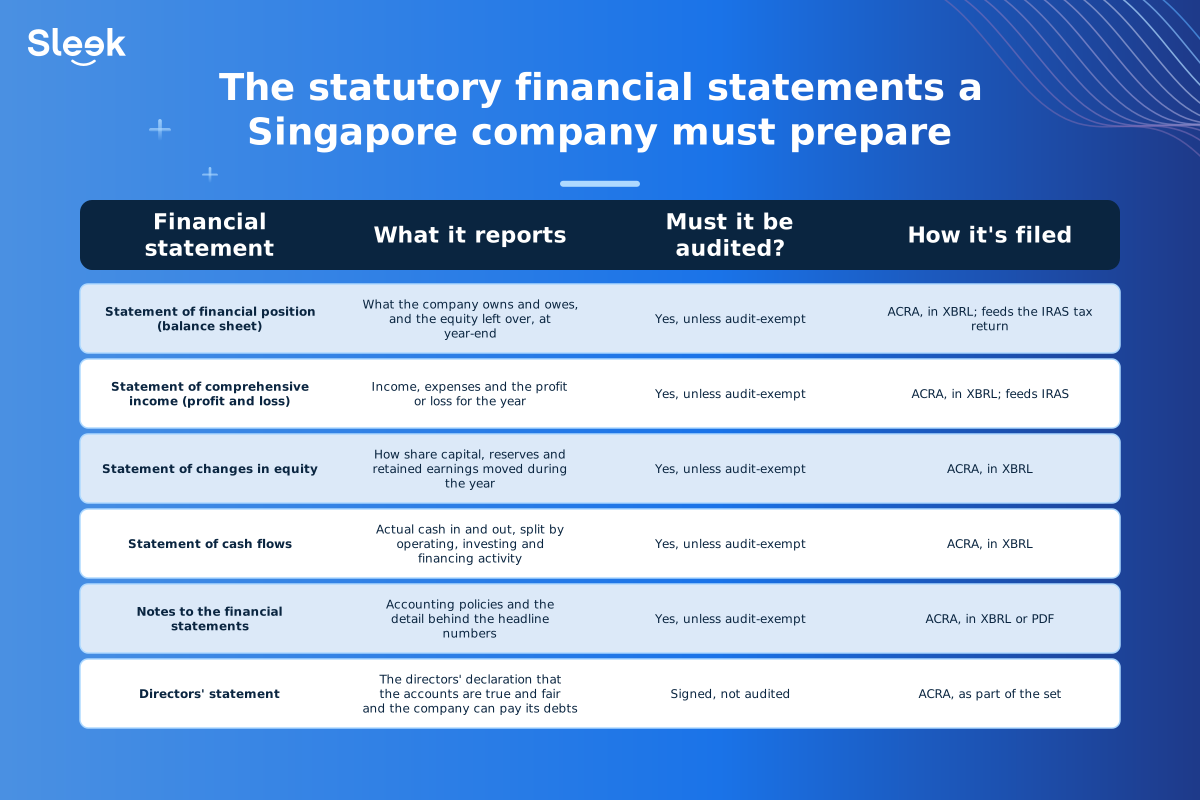 The statutory financial statements a Singapore company must prepare
 Choosing between full SFRS and SFRS for Small Entities
 TIP
TIP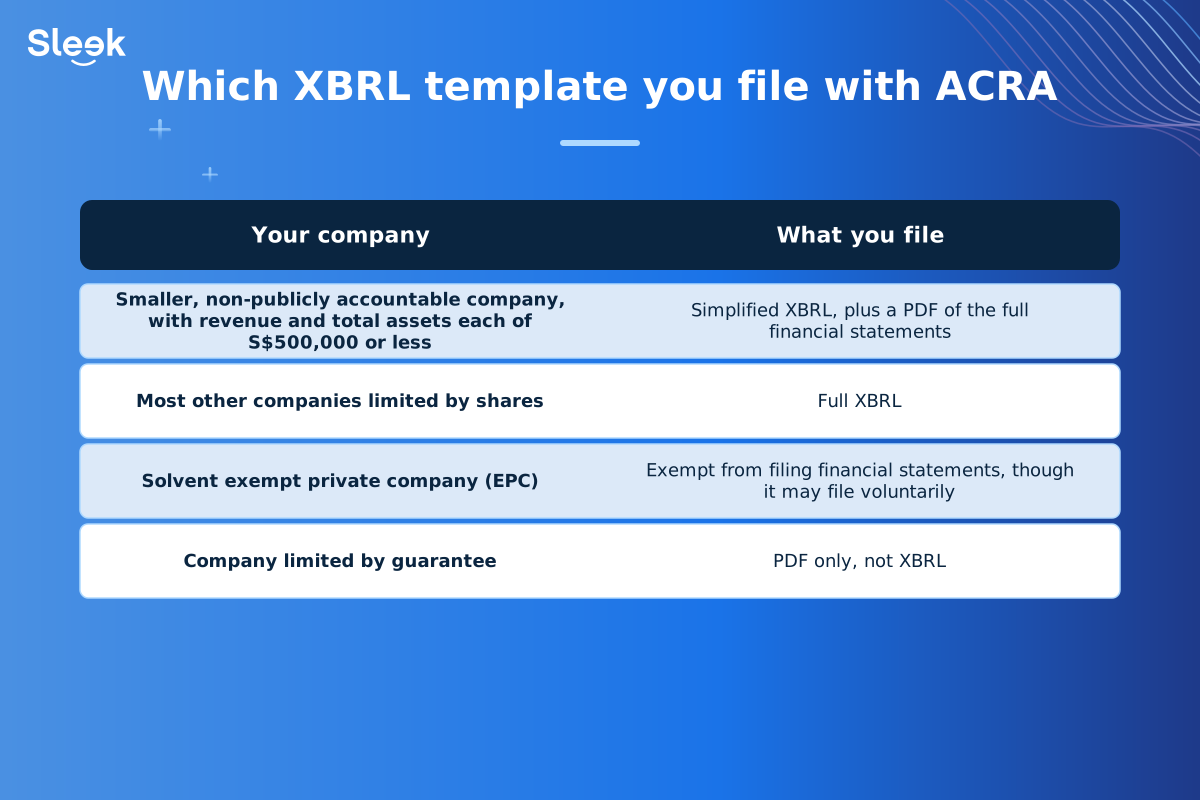 Which XBRL template you file with ACRA