





Australia
Singapore
Hong Kong
United Kingdom

Property Accounting and Financial Management for SMEs

Property Accounting and Financial Management for SMEs
By
|
9 mins read
|
Published:
|
Updated:

Make your properties pay you back

document.addEventListener("DOMContentLoaded", function() { document.getElementById('registerabusiness1')?.addEventListener('click', function() { fireEvent('AU_CTA_Resources_Register_a_business_with_expert_assistance_1'); }); document.getElementById('friendlyexpert1')?.addEventListener('click', function() { fireEvent('AU_CTA_Resources_Chat_with_a_friendly_expert_1'); }); document.getElementById('scheduleameeting1')?.addEventListener('click', function() { fireEvent('AU_CTA_Resources_Schedule_a_meeting_1'); }); document.getElementById('talktoanexpert1')?.addEventListener('click', function() { fireEvent('AU_CTA_Resources_Talk_to_an_expert_1'); }); });

Struggling to stay on top of your property finances?

Whether you manage a single investment property or an entire portfolio, the numbers can quickly get messy and missed details can cost you big time.

This guide breaks down property accounting and financial management, helping you take control of your cash flow, maximise your tax benefits, and make smarter investment decisions.

By the end, you’ll have a clear roadmap for managing property finances confidently. 

Stay on top of your property finances

What is property accounting?

At its foundation, property accounting involves the systematic tracking of income and expenses related to your real estate investments. This includes all financial activities, from rental income and mortgage payments to maintenance costs and property taxes. Maintaining accurate records gives you a clear and accurate picture of your property’s financial health and performance.

A crucial first step in property accounting is to choose an accounting method that suits your needs. The two primary accounting methods are cash basis accounting and accrual accounting

  • Cash basis accounting records income when you receive it and expenses when you pay them, which simplifies tax reporting for many individual investors.
  • Accrual accounting, on the other hand, records income when it is earned and expenses when they are incurred, regardless of when the cash changes hands. While more complex, this method can provide a more complete picture of your financial position. 

A tax agent can offer professional advice on which basis accounting method is best for your situation.

You will also need to establish a chart of accounts, which is a list of categories used to organise your financial transactions. This structure is central to good management accounting and financial reporting. Common categories include:
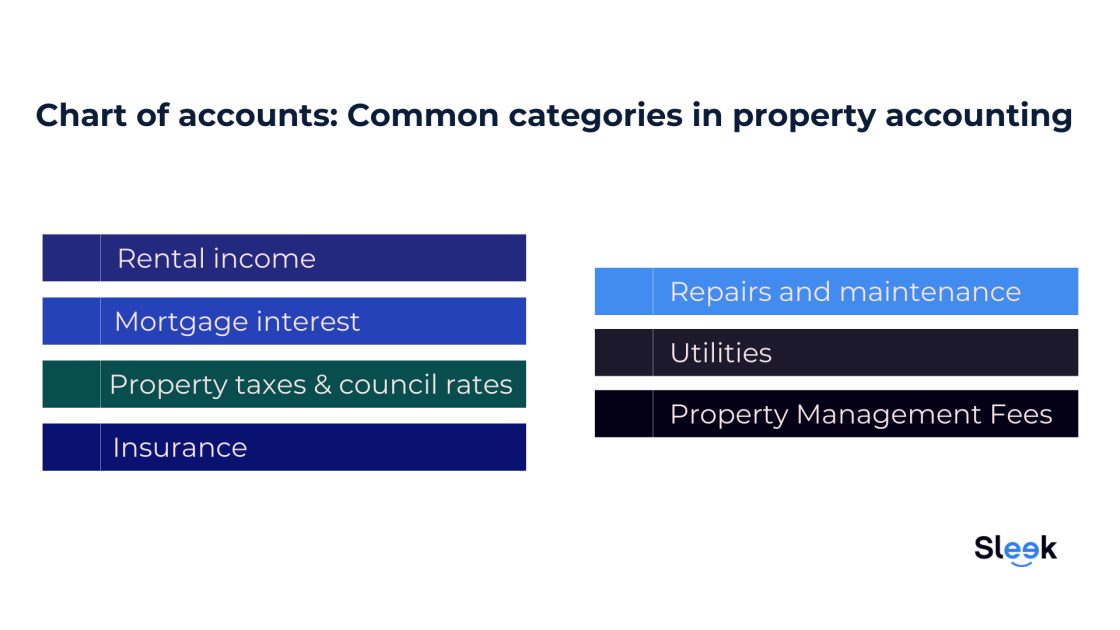
Chart of accounts in property accounting

By correctly categorising every transaction, you can easily see where your money is coming from and where it is going. This information is vital for making informed decisions about your investment property. It is the core financial data that supports your entire strategy.

Why accurate records matter in property accounting

Keeping detailed and accurate financial records is a non-negotiable part of property accounting and financial management. This discipline helps you stay organised and is also a legal requirement for tax purposes. The Australian Taxation Office (ATO) mandates that property owners keep records for five years from the date of lodging their tax return.

Proper record-keeping provides the proof needed to claim all your entitlements and meet your tax obligations. Some key documents you should always keep organised are:

  • Rental agreements and tenant records.
  • Bank statements for all property-related accounts.
  • Receipts and invoices for all deductible expenses.
  • Loan documents from your bank or mortgage broker.
  • Insurance policies and payment records.
  • Property valuations for capital gains purposes.
  • A detailed depreciation schedule.

To simplify accounting, consider using accounting software to help manage your records. Many modern platforms offer software tailored specifically for property investors, making it easier to track income and expenses. This technology helps generate financial reports and streamlines preparation for tax time.

Choosing the right management software ensures accurate accounting and secure data storage. Always review the privacy policy of any software provider before committing your financial data. Ultimately, these tools save time and give you confidence in your financial statements.

Discover the best accounting platforms in Australia in 2025 to streamline your finances.

RELATED ARTICLE

How to Claim Rental Property Tax Deductions and Maximise Your Returns

How to calculate and manage cash flow in property investment

Cash flow is the heartbeat of property investment, it shows whether your real estate is making money or bleeding it.

  • Positive cash flow: Your rental income is higher than your expenses
  • Negative cash flow: You’re spending more than you’re earning from the property

Use this simple formula:

Cash Flow = Total Income – Total Expenses

Here’s how to apply this formula:

3 steps to calculate cash flow in property investment

Step 1: List all income sources like:

  • Rent from tenants
  • Extra charges (e.g. parking, laundry, storage)

Step 2: List all operational expenses like: 

  • Mortgage repayments
  • Repairs and maintenance
  • Property management fees
  • Utilities
  • Insurance
  • Property taxes, council rates, and strata fees

Step 3: Consider occasional costs like: 

  • Annual water levies
  • Land tax
  • Unexpected repairs

If your result is positive, your property is generating a surplus.
If it’s negative, it may be time to:

  • Review your rent pricing
  • Reduce unnecessary costs
  • Improve your tenant retention or fill vacancies faster

Pro tip: Consistently monitoring your cash flow is key to building a sustainable, profitable property portfolio.

Rental property tax deductions every investor should know

Taxes are a major component of property accounting and financial management. In Australia, rental income is considered taxable income, but the system allows you to claim deductions for most expenses related to your rental property. Understanding these rules is essential for maximising returns.

A tax agent can help you navigate the complexities of Australian taxation and ensure you claim all available tax benefits. Proper tax planning can significantly improve your financial outcome at tax time. Many investors work with dedicated property accountants for this reason.

Common deductible expenses for rental properties include:

Expense category

Brief explanation

Interest on investment loan

You can claim the interest charged on the loan used to purchase your investment property.

Property management fees

All fees paid to property managers for their financial services are deductible.

Repairs and maintenance

Costs for keeping the property in a tenantable condition, such as fixing a leaky tap or broken window.

Council and water rates

Charges from your local council and water authority are deductible expenses.

Insurance

Premiums for landlord insurance, building insurance, and contents insurance are claimable.

Depreciation

You can claim a deduction for the decline in value of the building’s structure and its assets over time.

It is important to remember that you can only claim deductions for the period your property was rented or genuinely available for rent. If you use the property for personal reasons, you must apportion your expenses and only claim the part related to the investment. A depreciation schedule prepared by a qualified quantity surveyor is a valuable document that outlines deductions you can claim for asset decline.


RELATED ARTICLE

How to Calculate Capital Gains Tax on Property in Australia (Step-by-Step)?

Strategic financial planning for property investors in Australia

Successful property accounting and financial management extend beyond historical record-keeping into strategic financial planning. This involves setting clear financial goals, creating realistic budgets, and making informed decisions about your property investments. A forward-looking approach helps secure the long-term financial health of your portfolio.

1. Setting clear goals

First, define what you want to achieve with your investment properties. Are you seeking consistent rental income for cash flow, or are you focused on long-term capital growth? Your investment goals will shape your strategy and financial decisions, from the type of property you buy to how you manage it.

2. Creating a budget

A detailed budget helps you plan for both regular operating expenses and unexpected costs. Your budget should include categories for all known expenses, like mortgage repayments and management fees. Critically, it should also include a contingency fund for vacancies and major repairs, protecting your cash flow from shocks.

3. Planning for capital improvements

Over time, you will likely need to make significant capital improvements to your residential property or commercial property. This could involve updating a kitchen, replacing a roof, or renovating a bathroom. Planning and saving for these large expenses in advance prevents financial strain and helps maintain the property’s value.

4. Considering refinancing

You should regularly review the terms of your mortgage with a qualified mortgage broker. If interest rates have fallen or your property’s value has increased significantly, refinancing could lower your repayments. It may also allow you to access equity for expanding your property portfolio or for other investment opportunities.

What role does technology play in property accounting and financial management?

Modern technology offers powerful tools for property accounting and financial management. There is no need to rely on manual spreadsheets when dedicated property management software can automate and simplify the process. This accounting software designed for investors can help you with many tasks.

These platforms can help you efficiently manage your properties by offering features that:

  • Automate rent collection and track rent payments.
  • Categorise expenses by tracking income and spending.
  • Generate key financial reports like profit and loss statements and a balance sheet.
  • Manage tenant information and communication.
  • Streamline maintenance requests and scheduling.
  • Prepare financial statements for tax reporting.

Many leading management software solutions, with development teams from Sydney to Hong Kong, offer features for global investors. While these platforms have subscription costs, the time saved and the improved accuracy provide a strong return. They provide a complete picture of your finances, allowing for better decision-making and efficient property management.

What is the role of a property accountant or property manager? 

While some investors manage property accounting and financial management themselves, many seek professional help. Engaging a property accountant, manager, or both can provide valuable expertise. These professionals offer specialised financial services that support your investment journey.

  • Property managers handle the day-to-day operations of your rental property. 
  • Their tasks include
    • Finding and screening tenants
    • Managing lease agreements
    • Organising repairs
    • Ensuring consistent rent collection. 

Their work is especially valuable if you own multiple investment properties or live far from them.

  • An accountant experienced in property can help you optimise your tax planning and cash flow management. 
  • They provide professional advice on investment structures and ensure you remain compliant with Australian taxation laws. 
  • A good tax agent helps you claim all your deductions and build a sustainable property portfolio.

Although these professional services involve costs like property management fees, they often pay for themselves. They can save you significant time, reduce stress, and improve your overall financial outcomes by helping you make informed decisions.

Conclusion

Property accounting and financial management are learnable skills for any property owner. By understanding the fundamentals, keeping accurate records, managing your cash flow, and engaging in proactive financial planning, you build a strong foundation for success. This approach is key to growing your wealth through real estate.

Remember that every investment property is different, and strategies must be adapted to your specific circumstances. Do not hesitate to seek professional advice, use technology to your advantage, and adjust your approach as you gain experience. With a commitment to sound financial management, you can confidently work towards your investment goals and achieve a healthy return.

How Sleek can help with property accounting

Finding the right property accountant shouldn’t slow you down. Sleek’s expert accountants help Australian property investors stay compliant, optimise deductions, and structure their portfolios easily. 

Here’s how we support you:

  • Expert advice for property investors
    Get tailored guidance on ownership structures, negative gearing, and capital gains.
  • Full compliance support
    From rental income to depreciation schedules, we take care of your investment tax returns and help you claim everything you’re entitled to, while meeting all deadlines. 
  • Upfront and transparent pricing
    No surprises, no hidden charges. You’ll always know what you’re paying for and what it’s saving you.
  • Dedicated support year-round
    Get answers when you need them, not just at tax time. We’re here to help you grow your portfolio, one smart step at a time.

Ready to work with accountants who actually understand property? Schedule a call now.

Take control of your property accounting

FAQs about property accounting and financial management

Your investment structure—sole trader, company, trust, or SMSF—has a direct impact on your tax rate, liability exposure, and ability to split income. For example, a discretionary trust may offer flexibility in distributing income, while a company can cap tax rates. Choosing the right setup should consider both your short- and long-term financial goals and should be reviewed as your portfolio grows.

Repairs are deductible in the year they’re incurred, such as fixing a leaking tap. Capital improvements (like kitchen renovations) are capitalised and depreciated over time. A tax agent or quantity surveyor can help you distinguish and optimise both.

If your property expenses exceed income, you may be eligible for a tax deduction on the loss against other income sources. However, it’s only beneficial if the property’s long-term capital gains outweigh the ongoing shortfalls. Consider how this fits into your broader investment strategy.

Maintain detailed records from day one, purchase price, acquisition costs, legal fees, renovation expenses, depreciation claims, and sale costs. These will determine your cost base. Failing to track this accurately can lead to inflated tax liabilities when you dispose of the asset.

Sleek is the preferred partner of entrepreneurs
Expertise in company
incorporation, accounting, tax
services, and compliance.
thumbs up icon
Trusted by over
450,000
businesses worldwide.
reviews
4.8/5
stars
on Google
from 4,100+ reviews.
95%
satisfaction rate from
16,000 surveyed clients.
computer with files on it icon
Expertise in company incorporation, accounting, tax services, and compliance.
thumbs up icon in chathead
Trusted by over
450,000
businesses worldwide.
5 star reviews icons of chatboxes
4.8/5
5 golden stars
on Google
from 4,100+ reviews.
speedometer at max speed icon
95%
satisfaction rate from
16,000 surveyed clients.