





Online low investment business ideas in Singapore (lean and scalable)
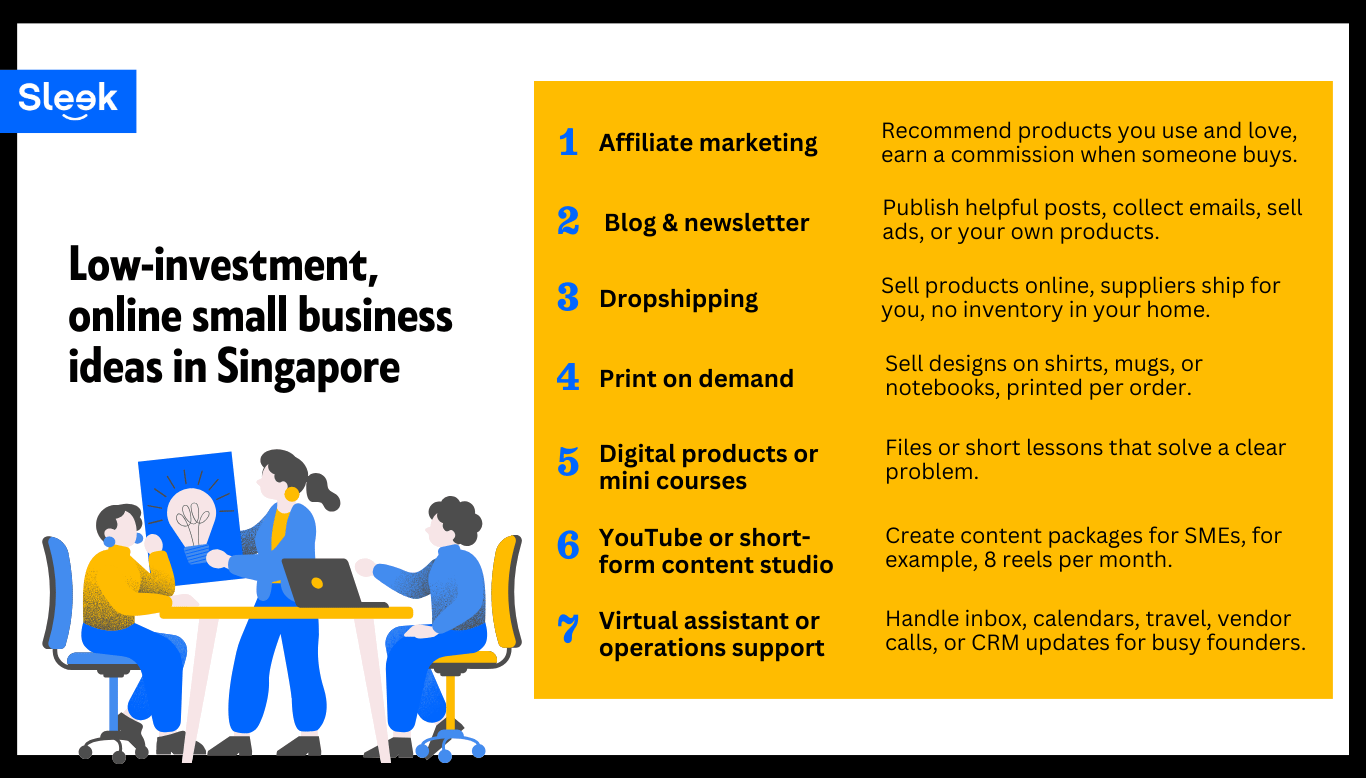
These low investment business ideas work well if you like building online assets. Keep it simple, ship fast, learn from the first ten customers.
1. Affiliate marketing
- What it is: Recommend products you already use and love, and earn a commission when someone buys.
- How it makes money: Brands pay a percentage of each sale, usually tracked with your unique link.
- Who it suits: People who enjoy writing useful guides or reviews, and are patient with compounding traffic.
- Starter steps: Pick a niche you know, write three helpful guides, join a few affiliate programs, and add clear disclosures.
- Example: A Singapore-based productivity blog that recommends note apps, webcams, and standing desk add-ons.
- Starter cost: Domain and basic site, optional email tool.
- First sale timeline: Often 2 to 6 weeks if you already have an audience, longer if you are starting from zero.
- Common pitfalls: Thin listicles, chasing every product, not building trust.
- Tools to try: WordPress or Notion site, Google Search Console, Canva for images.
- Singapore tip: Keep records of commissions for tax, separate personal and business accounts.
2. Blog and newsletter
- What it is: Publish helpful posts, collect emails, sell ads, or your own products.
- How it makes money: Sponsorships, affiliate links, digital products, and small services.
- Who it suits: Clear communicators who can post weekly.
- Starter steps: Choose a narrow topic, publish a weekly post, add one lead magnet, and send a simple newsletter.
- Example: A neighbourhood food business newsletter that highlights weekend deals, later sells a paid city guide.
- Starter cost: Domain, hosting, and email tool.
- First sale timeline: 4 to 8 weeks for small sponsorships or product pre-sales if your topic is focused.
- Common pitfalls: Writing for everyone, skipping the email list.
- Tools to try: Beehiiv or MailerLite, Google Docs, and a simple landing page.
- Singapore tip: Issue invoices for sponsors, keep receipts for hosting and tools.
3. Dropshipping
- What it is: Sell products online, suppliers ship for you, no inventory in your home.
- How it makes money: Your price minus supplier price and shipping is your margin.
- Who it suits: People who enjoy testing product pages and ads.
- Starter steps: Validate one product with small ad tests, set up clear product pages, and handle support fast.
- Example: Phone accessory bundles with better photos and a clear warranty.
- Starter cost: Store platform, sample orders, small ad budget.
- First sale timeline: Often within 1 to 3 weeks once pages and ads are live.
- Common pitfalls: Slow suppliers, weak product photos, poor customer service.
- Tools to try: Shopify basic, Google Sheets for orders, Meta Ads with tiny tests.
- Singapore tip: Keep import and supplier invoices, ask about GST early, and check if an import permit is needed for your product type via Singapore Customs.
4. Print on demand
- Singapore tip: Track the cost per item from the printer for clean bookkeeping.
- Tools to try: Canva, Printful or local POD partners, Shopify, or Etsy style marketplace.
- Common pitfalls: Too many random designs, unclear sizing, and shipping times.
- First sale timeline: 1 to 4 weeks if you already have an audience or partner with small communities.
- Starter cost: Design tool, store platform.
- Example: Minimalist neighbourhood-themed totes that work as gifts.
- Starter steps: Create 10 designs around one theme, use mockups, and launch to friends first.
- Who it suits: Creatives who like simple product design and community building.
- How it makes money: You set the retail price, the printer charges a base cost,and you keep the difference.
- What it is: Sell designs on shirts, mugs, or notebooks, printed per order.
5. Digital products, templates, or mini courses
- Singapore tip: Invoice automatically, keep passive income logs for tax.
- Tools to try: Gumroad or Lemon Squeezy, Loom for quick videos, Google Slides for templates.
- Common pitfalls: Building a giant course before testing demand.
- First sale timeline: 1 to 3 weeks if your audience already asks for this help.
- Starter cost: Course or file delivery tool, recording basics.
- Example: A GST-ready invoicing template for freelancers, with a short setup video.
- Starter steps: Run a pre-sale to validate, build a simple version first, and add short video walkthroughs.
- Who it suits: People who have solved a problem and can teach it simply.
- How it makes money: One-time purchases or small memberships.
- What it is: Files or short lessons that solve a clear problem.
6. YouTube or short-form content studio
- What it is: Create content packages for SMEs, for example, 8 reels per month.
- How it makes money: Monthly retainers with clear deliverables.
- Who it suits: People who enjoy filming and editing and can keep a calendar.
- Starter steps: Pick one industry, show three samples, price a simple monthly package, and deliver on time.
- Example: A simple vertical video package for cafes and fitness studios.
- Starter cost: Phone or camera, editing software.
- First sale timeline: 1 to 4 weeks with outreach to local businesses.
- Common pitfalls: Custom scope every time, no boundaries on revisions.
- Tools to try: CapCut or Premiere, Google Drive, and a content calendar in Notion.
- Singapore tip: Use simple service agreements, license usage in writing.
7. Virtual assistant or operations support
- What it is: Handle inbox, calendars, travel, vendor calls, or CRM updates for busy founders.
- How it makes money: Monthly retainers for a set number of hours and tasks.
- Who it suits: Organised people who like checklists and routines.
- Starter steps: Define three tasks you do best, offer a small trial, convert to a retainer.
- Example: Manage a solo founder calendar, renew subscriptions, and prepare weekly summaries.
- Starter cost: Productivity tools and a business email.
- First sale timeline: Often within 2 weeks through referrals and LinkedIn outreach.
- Common pitfalls: Saying yes to everything, no working hours, and scope creep.
- Tools to try: Google Workspace, Calendly, WhatsApp Business for quick updates.
- Singapore tip: If you hire later, add payroll to stay compliant.
Service-based low investment business ideas in Singapore (start with the skills you have)

Start with skills you already have, sell a clear outcome, keep scope tight, and collect testimonials.
1. Freelance design, copy, or development
- What it is: Project work that helps clients convert or ship faster.
- How it makes money: Fixed price packages with clear deliverables.
- Who it suits: Makers who can show a portfolio and stick to deadlines.
- Starter steps: Create two fixed packages, publish three case notes, and ask happy clients for a one-line quote.
- Example: A landing page redesign that raises email signups for a Pilates studio.
- Starter cost: Portfolio site and tools you already use.
- First sale timeline: 1 to 3 weeks with focused outreach.
- Common pitfalls: Hourly rates with no boundaries, unpaid scope.
- Tools to try: Figma, Webflow, or WordPress, PandaDoc for simple e-signatures.
- Singapore tip: Track receivables so cash does not get stuck.
2. Social media management
- What it is: Plan, create, and schedule posts, reply to comments, light reporting.
- How it makes money: Monthly retainer per platform, add-ons for reels or community replies.
- Who it suits: People who enjoy content calendars and light analytics.
- Starter steps: Pick one platform per client, create a content calendar, and run a one-month trial.
- Example: A simple plan for a Bukit Timah cafe, three posts per week, and two reels.
- Starter cost: Scheduling tool, design tool.
- First sale timeline: 2 to 4 weeks through local F&B, wellness, or retail.
- Common pitfalls: Posting without a goal, no approval workflow.
- Tools to try: Buffer or Meta Planner, Canva, and Google Drive for assets.
- Singapore tip: Put deliverables in a one-page agreement.
3. Photography or videography
- What it is: Product, food, or event shoots with editing.
- How it makes money: Half-day or full-day rates, plus editing packages.
- Who it suits: People with a good eye and reliable delivery.
- Starter steps: Build a small portfolio, sell a half-day package, deliver fast, and ask for referrals.
- Example: A product shoot for a skincare brand with ten edited images.
- Starter cost: Camera or phone, and lights you can rent.
- First sale timeline: 1 to 3 weeks if you pitch existing venues or cafes.
- Common pitfalls: Raw file confusion, unclear rights.
- Tools to try: Lightroom, CapCut, Google Photos album for delivery.
- Singapore tip: Put licensing and usage in your quote.
4. Recruitment or micro talent matching
- What it is: Help SMEs find part-time or contract staff in one niche.
- How it makes money: Placement fees or a small subscription for access to candidates.
- Who it suits: Networkers who like matching people to roles.
- Starter steps: Build a shortlist, charge a clear placement fee, and keep records of hours and payments.
- Example: Matching events staff to weekend gigs for malls.
- Starter cost: Job board credits and simple CRM.
- First sale timeline: 2 to 6 weeks, depending on role.
- Common pitfalls: Vague fees, unclear replacement terms.
- Tools to try: Airtable for candidate tracking, Google Forms for intake.
- Singapore tip: If you pay contractors, add payroll when ready.
5. Online tutoring or coaching
- What it is: Help students or adults hit a goal, for example, IELTS, coding basics, or career moves.
- How it makes money: Session packs or monthly plans.
- Who it suits: Patient teachers who like one-to-one calls.
- Starter steps: Offer a free 15-minute consultation, sell a four-session starter pack, and track progress.
- Example: A four-week English-speaking booster for new hires.
- Starter cost: Video tool, scheduling tool.
- First sale timeline: 1 to 3 weeks through community groups or referrals.
- Common pitfalls: One-size-fits-all lesson plans, no homework.
- Tools to try: Google Meet, Calendly, and Notion for notes.
- Singapore tip: Keep clear attendance and receipts for parents or HR.
6. Event planning, small format
- What it is: Micro events for SMEs, product launches, or workshops.
- How it makes money: Planning fee plus vendor coordination fee.
- Who it suits: Organisers who enjoy lists and timelines.
- Starter steps: Create a venue partner list, price a starter package, and take deposits.
- Example: A thirty-person workshop with a venue and light snacks.
- Starter cost: Templates, contracts, a kit of basics.
- First sale timeline: 3 to 6 weeks.
- Common pitfalls: Vendor no-shows, unclear responsibilities.
- Tools to try: Google Sheets for run sheets, WhatsApp groups for vendors.
- Singapore tip: Keep deposits in your accounts and issue receipts.
7. Personal training, virtual first
- What it is: One-to-one or small group sessions from home or a park.
- How it makes money: Session packs and monthly plans.
- Who it suits: Trainers who like coaching and accountability.
- Starter steps: Offer a form check session, sell monthly packs, and track sessions in a simple sheet.
- Example: A four-week beginner’s strength plan with video check-ins.
- Starter cost: Basic gear and scheduling tool.
- First sale timeline: 1 to 2 weeks with friends of friends.
- Common pitfalls: Cancellations without policy, no warm-up plan.
- Tools to try: Google Sheets for programs, Zoom, and Stripe for payments.
- Singapore tip: Consider basic coverage, keep medical notes private.
8. Cleaning or pet services
- What it is: Home cleaning, pet sitting, or dog walking with simple routing.
- How it makes money: Weekly slots and simple packages, with extra fees for deep cleaning or last-minute requests.
- Who it suits: Reliable people who like routines and customer service.
- Starter steps: Start in one neighbourhood, sell weekly slots, collect reviews.
- Example: A two-hour weekly clean for condo units, with a checklist.
- Starter cost: Supplies and basic transport.
- First sale timeline: 1 to 2 weeks through condo boards or WhatsApp groups.
- Common pitfalls: Overbooking, unclear scope.
- Tools to try: Google Calendar, WhatsApp Business, and a simple invoice template.
- Singapore tip: Keep simple service agreements and receipts.

Niche low investment business ideas in Singapore (test demand fast)
Great for builders who like small experiments. Aim for ten paying customers before you add complexity.
1. Handmade or crafted goods
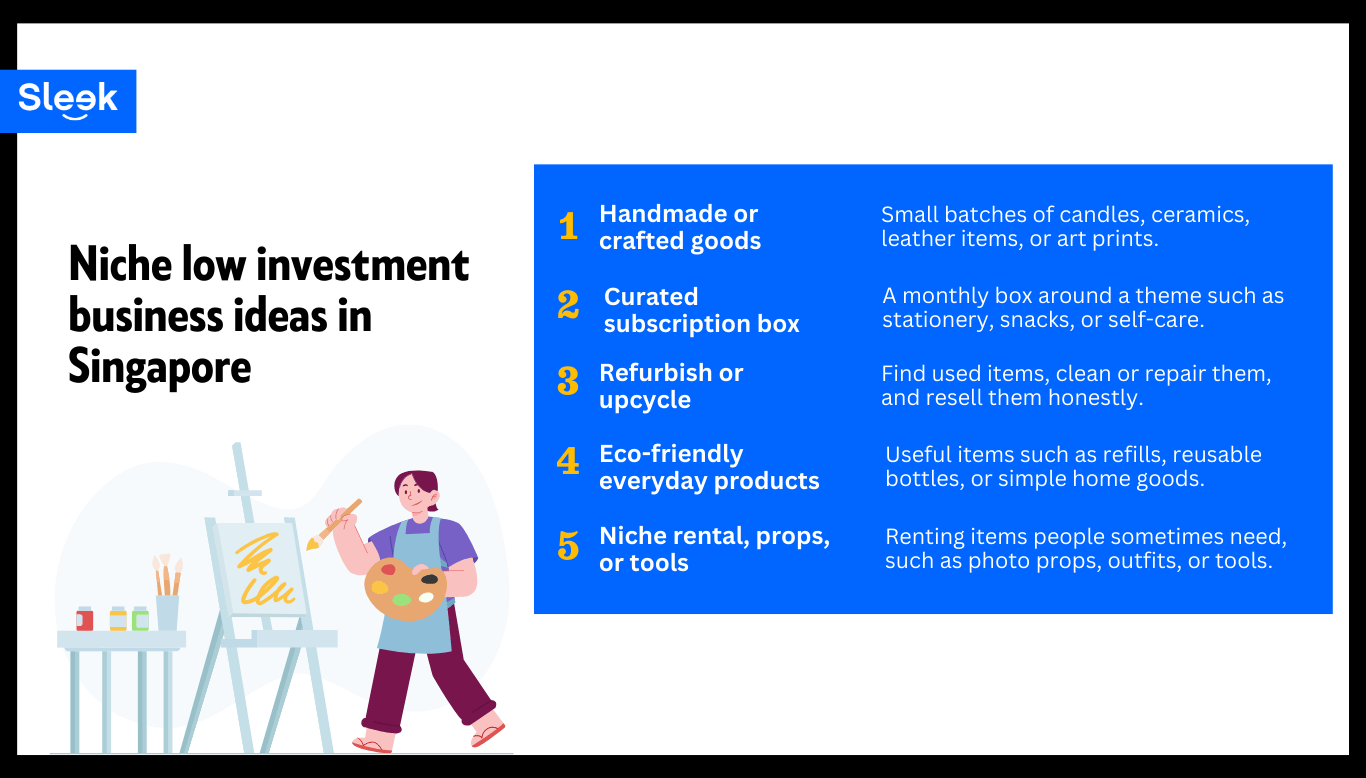
- What it is: Small batches of candles, ceramics, leather items, or art prints.
- How it makes money: Simple margin on each item, bundles for gifts.
- Who it suits: People who enjoy making and packaging.
- Starter steps: Launch three products, take pre-orders, and improve from feedback.
- Example: A limited run of neighbourhood scented candles with refill options.
- Starter cost: Materials and packaging.
- First sale timeline: 1 to 3 weeks at markets or online groups and communities.
- Common pitfalls: Too many SKUs, pricing by emotion.
- Tools to try: Google Sheets for cost per unit, Canva for labels, Carousell or Instagram Shops.
- Singapore tip: Keep a clear inventory and cost per item.
2. Curated subscription box
- What it is: A monthly box around a theme such as stationery, snacks, or self-care.
- How it makes money: Recurring monthly revenue with upsells for limited editions.
- Who it suits: Curators who like discovering products and delighting customers.
- Starter steps: Pre-sell 20 boxes, order only what you need, and deliver on the same day each month.
- Example: A wellness mini box for desk workers, tea, heat pack, stretch band.
- Starter cost: Sample stock and packaging.
- First sale timeline: 2 to 4 weeks with pre-orders.
- Common pitfalls: Buying too much stock, unclear skip policy.
- Tools to try: Shopify plus a subscription app, Google Sheets for monthly picks.
- Singapore tip: Track recurring revenue in your books.
3. Refurbish or upcycle
- What it is: Find used items, clean or repair them, and resell them with better photos and honest descriptions.
- How it makes money: Buy low, add value with repairs or styling, resell.
- Who it suits: Tinkerers who like fixing and staging.
- Starter steps: Start with one category, such as chairs or small electronics, document the before-and-after, and list weekly.
- Example: Modernising wooden chairs with light sanding and new fabric.
- Starter cost: Tools and parts you actually need.
- First sale timeline: 1 to 3 weeks, depending on category.
- Common pitfalls: Buying broken items without testing, no returns policy.
- Tools to try: Google Photos, Sheets for cost tracking, Carousell listings.
- Singapore tip: Keep proof of purchase and sale records.
4. Eco-friendly everyday products
- What it is: Useful items such as refills, reusable bottles, or simple home goods.
- How it makes money: Small but steady margin, bundles for households.
- Who it suits: Practical people who care about utility more than hype.
- Starter steps: Test at small pop-ups, create bundles, focus on utility, not hype.
- Example: A refill station pop-up with a subscription for monthly refills.
- Starter cost: Low minimum orders, if possible.
- First sale timeline: 2 to 4 weeks.
- Common pitfalls: Over-branded packaging that eats margin.
- Tools to try: Google Forms for orders, Sheets for inventory, and Instagram for local awareness.
- Singapore tip: Keep any compliance documents from suppliers.
5. Niche rental, props, or tools
- What it is: Renting items people sometimes need, such as photo props, outfits, or home tools.
- How it makes money: Rental fees, deposits, and optional delivery.
- Who it suits: People who care for items and manage schedules well.
- Starter steps: Create a price list and a simple calendar, take deposits, and check items on return.
- Example: Event backdrop rentals for birthdays and corporate shoots.
- Starter cost: Initial items, storage space if needed.
- First sale timeline: 1 to 3 weeks with Instagram or Carousell listings.
- Common pitfalls: No deposit, no condition photos.
- Tools to try: Google Calendar, Stripe payment links, a simple site.
- Singapore tip: Keep receipts for deposits and rentals.
Home-based low investment ideas in Singapore (work from where you are)
If you want to work from home, these low investment business ideas are simple to start and easy to scale.
1. Remote consulting in ops, finance, or marketing
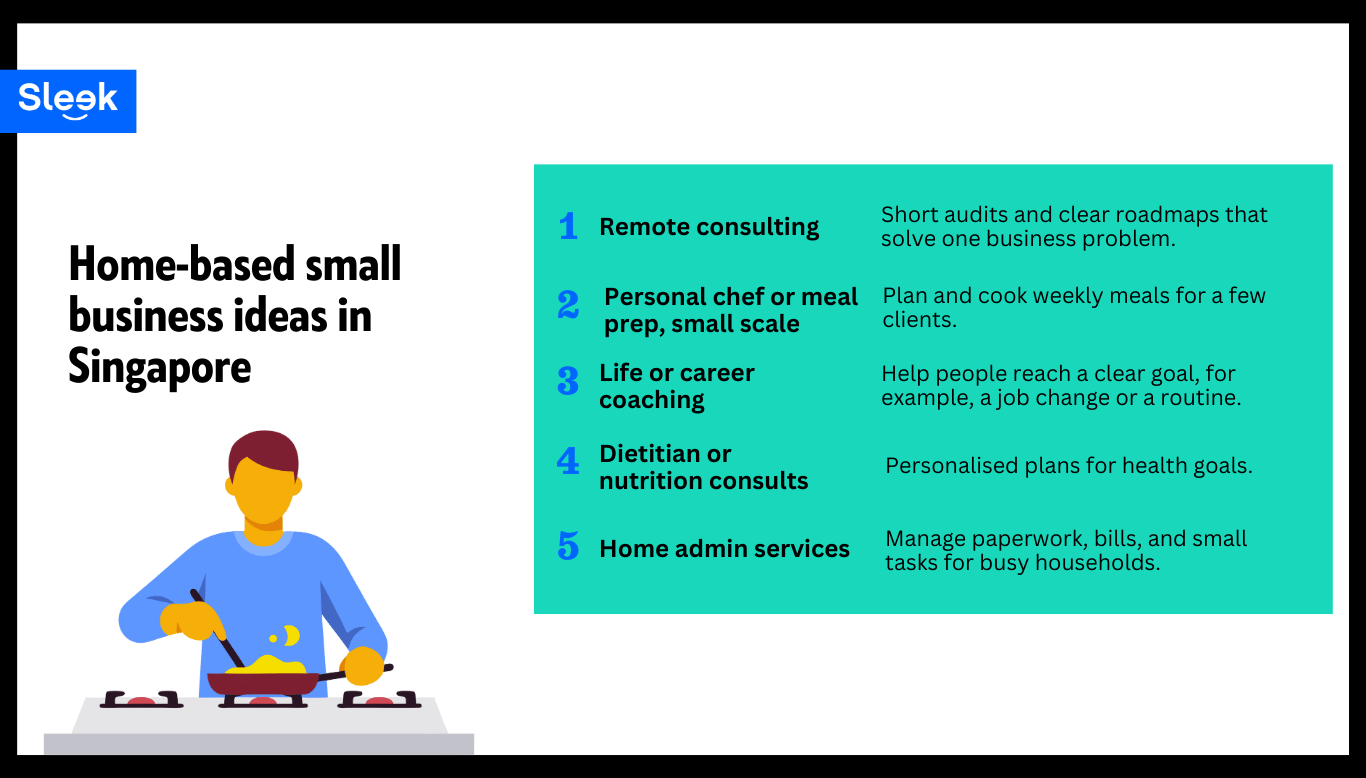
- What it is: Short audits and clear roadmaps that solve one business problem.
- How it makes money: Fixed fee audits with optional monthly retainers.
- Who it suits: Professionals with past wins they can repeat.
- Starter steps: Offer a fixed-price audit, present a one-page report, and pitch an optional monthly plan.
- Example: A sales pipeline cleanup that improves response time for an SME.
- Starter cost: Meeting tools and a simple proposal template.
- First sale timeline: 1 to 3 weeks via LinkedIn or past colleagues.
- Common pitfalls: Custom work with no scope, unpaid extra meetings.
- Tools to try: Notion for audit templates, Google Slides for reports.
- Singapore tip: Pte. Ltd. often signals trust for B2B clients.
2. Personal chef or meal prep, small scale
- What it is: Plan and cook weekly meals for a few clients.
- How it makes money: Weekly meal plans with delivery or pick up.
- Who it suits: Home cooks who like consistency and planning.
- Starter steps: Offer a sample menu, collect dietary info, cook in small batches, and deliver on a set day.
- Example: A healthy lunch plan for new parents in one condo cluster.
- Starter cost: Ingredients and storage boxes.
- First sale timeline: 1 to 3 weeks through condos or parenting groups.
- Common pitfalls: Custom menus for every client, no delivery plan.
- Tools to try: Google Forms for orders, Sheets for prep lists, WhatsApp Business for updates.
- Singapore tip: Check any food handling guidance before scaling.
3. Life or career coaching
- What it is: Help people reach a clear goal, for example, a job change or a routine.
- How it makes money: Program-based fees, upgrades for group sessions.
- Who it suits: Good listeners who can create simple frameworks.
- Starter steps: Define a six-week program, include templates and checklists, and meet weekly.
- Example: A job search sprint with resume, outreach, and interview practice.
- Starter cost: Video tool and scheduling.
- First sale timeline: 1 to 3 weeks with referrals and simple content.
- Common pitfalls: Vague outcomes, no program timeline.
- Tools to try: Google Docs for workbooks, Calendly, Meet.
- Singapore tip: Keep client notes private and secure.
4. Dietitian or nutrition consults
- What it is: Personalised plans for health goals.
- How it makes money: Assessment plus follow-up packages.
- Who it suits: Qualified professionals who enjoy one-to-one work.
- Starter steps: Offer an initial assessment, provide a simple plan, and follow up in two weeks.
- Example: An office worker’s plan that fits hawker centre lunches.
- Starter cost: Video tool and forms.
- First sale timeline: 2 to 4 weeks.
- Common pitfalls: Overly complex plans, no habit tracking.
- Tools to try: Google Forms intake, Docs plan templates, Meet check-ins.
- Singapore tip: Follow your professional standards and data privacy.
5. Home admin services
- What it is: Manage paperwork, bills, and small tasks for busy households.
- How it makes money: Weekly packages, add-ons for deep file cleanup days.
- Who it suits: Organised people who like tidy systems.
- Starter steps: Offer a three-hour weekly package, create a checklist, and send monthly summaries.
- Example: Moving a family from paper piles to labelled folders and a bill calendar.
- Starter cost: Basic tools only.
- First sale timeline: 1 to 2 weeks within your block or estate.
- Common pitfalls: Taking one-off tasks without a plan.
- Tools to try: Google Drive folders, Sheets checklist, WhatsApp Business.
- Singapore tip: Keep receipts and protect client data.