








Expert Accounting & Year-Round Peace of Mind – now at ‎‎ 20% OFF! .
Expert Accounting & Year-Round Peace of Mind – now at ‎‎ 20% OFF! . Offer ends in:
Days
Hours
Min
Secs
United Kingdom
Singapore
Australia
Hong Kong

How to Register for VAT in the UK

9 mins read
Picture of Alexander Dale-Makin
Alexander Dale-Makin
AI Content Marketing Specialist
Alexander is an experienced content writer who leads UK-focused content at Sleek, simplifying complex financial and regulatory topics to help entrepreneurs and SMEs make confident business decisions.
LinkedIn
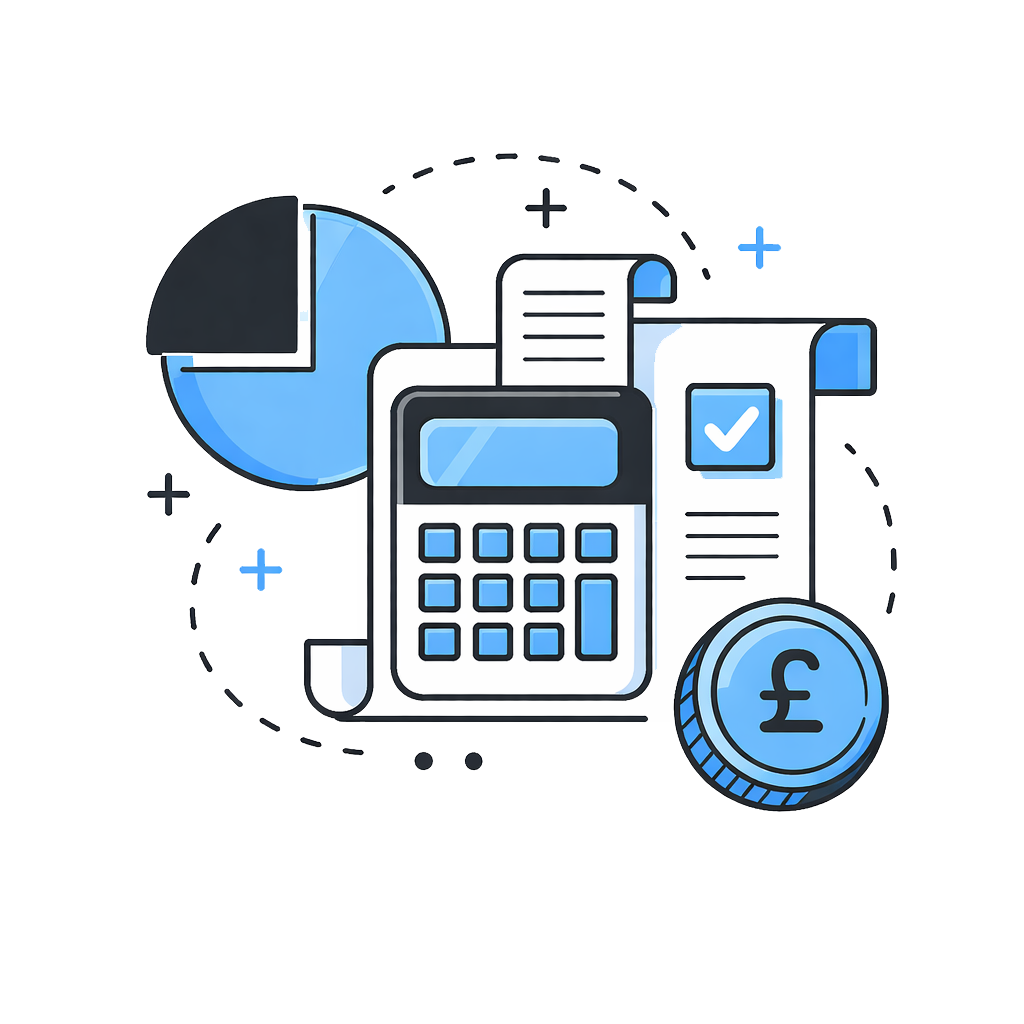
Illustrated guide to registering for VAT in the UK, showing a checklist, VAT card, laptop, charts, and pound coins on a blue background.
Key takeaways
  • You must register for VAT if your taxable turnover exceeds £90,000 or will within 30 days.
  • You can complete VAT registration online via HMRC, but errors can delay approval.
  • Using a register for VAT service can speed up the process and ensure compliance from day one.
In this article

How to register for VAT depends on whether your business has crossed the registration threshold, but in most cases the process is completed online through HMRC. If your taxable turnover has gone above £90,000 in the last 12 months, or you expect it to exceed £90,000 in the next 30 days, you usually need to register.

If you want help getting registered properly and staying compliant afterwards, Sleek’s VAT returns service gives you support beyond the application itself.

This guide explains when VAT registration is required, what information you need, how to complete the process, and when using a register for VAT service makes sense.

Getting VAT registration right first time saves you from delays, penalties, and unnecessary admin.

When do you need to register for VAT?

You must register for VAT if your total taxable turnover for the last 12 months goes over £90,000. You must also register if you expect your taxable turnover to go over £90,000 in the next 30 days.

You can also choose voluntary VAT registration if your turnover is below the threshold. That can make sense if you want to reclaim VAT on eligible business purchases, work mainly with VAT-registered clients, or expect your turnover to rise soon.

If your business is based outside the UK and you supply taxable goods or services to the UK, different rules can apply and registration may be required regardless of turnover.

What counts towards taxable turnover?

Taxable turnover is not just your standard-rated sales. It can also include zero-rated and reduced-rate supplies, some goods you loan or gift, reverse-charge services from overseas businesses, and certain domestic reverse-charge transactions.

That is why many businesses misjudge the threshold. If you are unsure what should be included, it helps to understand your business turnover before you start the application.

Should you register voluntarily?

Voluntary registration can be useful, but it is not automatically the right choice.

It often makes sense when:

  • your customers are mainly VAT-registered businesses
  • you have significant startup or operating costs with VAT on them
  • you want to look more established
  • you expect to cross the threshold soon anyway

It can be less attractive when:

  • your customers are mainly consumers who cannot reclaim VAT
  • adding VAT would make your pricing less competitive
  • you are not ready for the record-keeping and filing requirements

HMRC provides a tool to help businesses assess what VAT registration may mean for them, which can be useful if you are on the fence.

What you need before you register for VAT

Before you begin, gather the details HMRC is likely to ask for. The exact list depends on your business structure, but most applicants will need:

  • business details and contact information
  • bank account details
  • taxable turnover figures
  • Unique Taxpayer Reference
  • company registration number if you run a limited company
  • information linked to Corporation Tax, Self Assessment, or PAYE where relevant

If any of those details are missing, sort them out first. These guides on your tax reference number and company registration number can help you track down the information before you apply.

How to register for VAT step by step
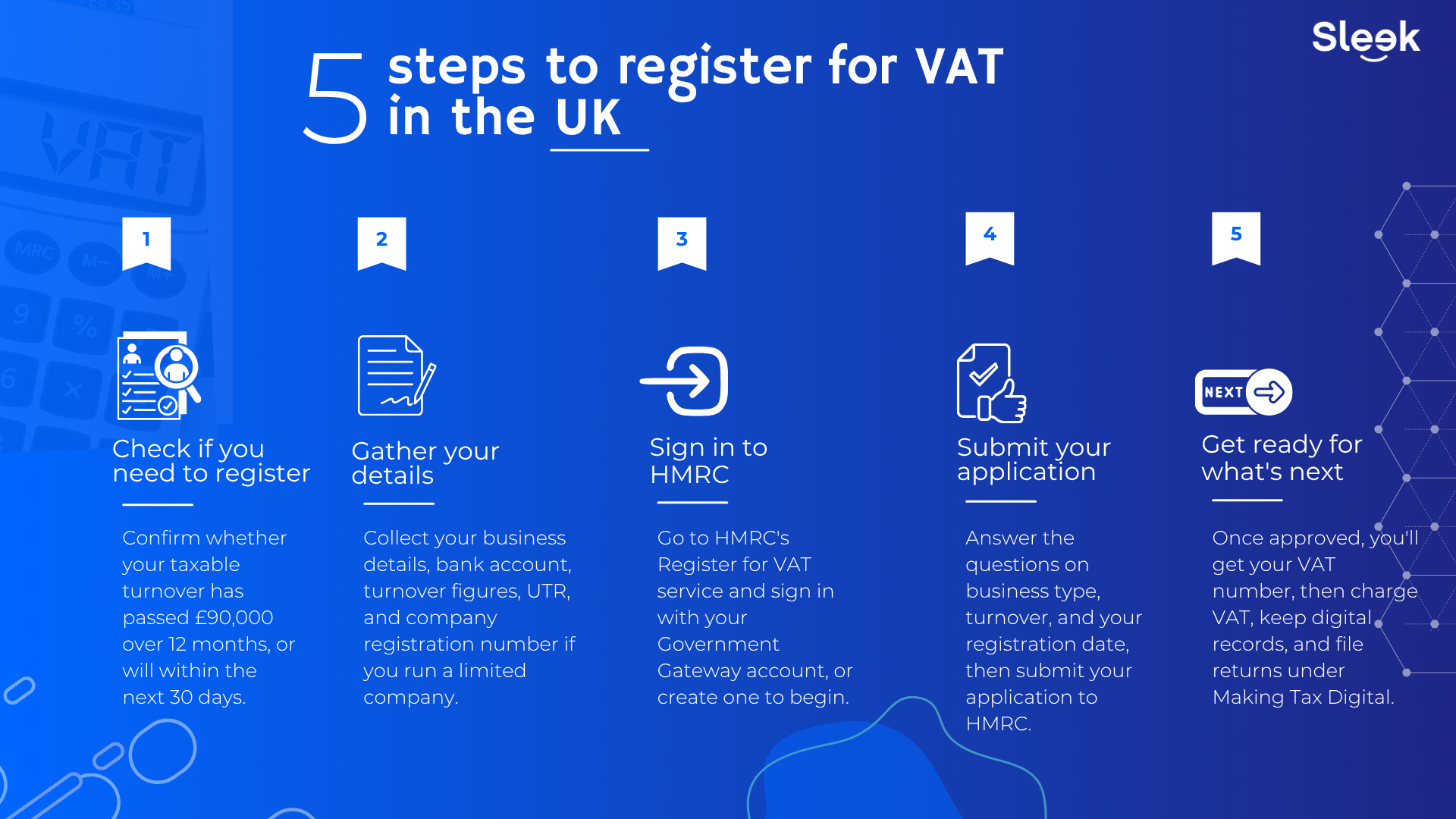
For most businesses, VAT registration is done online through HMRC using a Government Gateway account. If you do not already have login details, you can create them as part of the process.

Step 1: Check whether you need to register now

Start by confirming whether you have already crossed the threshold or expect to exceed it soon. This matters because your registration deadline and effective date can change depending on which rule applies.

For example, if your turnover exceeded the threshold during the last 12 months, you normally need to register within 30 days of the end of the month in which you went over. If you know you will exceed the threshold in the next 30 days, you need to register by the end of that 30-day period.

Step 2: Sign in to HMRC and start the application

Go to HMRC’s Register for VAT service and sign in with your Government Gateway details. If you do not have an account, you can create one there.

At this stage, you will be guided through questions about your business type, turnover, trading activity, and the date from which VAT registration should apply.

Step 3: Enter your business and tax details carefully

HMRC will ask for information about your business structure, turnover, bank details, and connected tax records. This is where many avoidable delays happen, especially when the registration date or turnover figures are entered incorrectly.

If you are registering a company that has only recently started trading, it is worth checking your setup against related obligations like registering for Corporation Tax and setting up your first business bank account.

Step 4: Submit your application

Once you submit the application, HMRC reviews the details and confirms your VAT number and effective date of registration if approved. You will need that VAT number on your invoices and for your VAT records.

If HMRC needs more information, delays can happen. That is one reason some businesses use a register for VAT service instead of handling it alone.

Step 5: Get ready for what happens after registration

Registration is only the start. Once registered, you need to charge VAT where applicable, keep digital records, and file VAT Returns using compatible software under Making Tax Digital rules.

That is why businesses often treat registration and ongoing compliance as part of the same job. If you need a refresher later, this guide on Making Tax Digital for VAT covers what changes once you are live.

How long does VAT registration take?

HMRC does not give one single guaranteed timeline on the main registration page, and processing times can vary depending on the application and whether further checks are needed. The practical point is that you should not leave registration until the last minute if you are close to the threshold.

If you know a large contract will push you over soon, acting early reduces the chance of missing the correct effective date. It also gives you more time to prepare your invoices, systems, and software.

What happens after you register for VAT?

Once you are registered, you normally need to start charging VAT on relevant sales from your effective date of registration. You must also keep digital VAT records and submit returns using compatible software, because VAT-registered businesses are within Making Tax Digital unless exempt.

Most VAT-registered businesses submit VAT Returns every three months. Even if your VAT position is straightforward, it is worth having a clear process for invoicing, bookkeeping, and record retention from day one.

You may also want to understand:

Tip

Do not treat VAT registration as a one-off admin task. Set up your bookkeeping and filing process before your VAT number arrives, so you are ready to invoice correctly from your effective date.

Common VAT registration mistakes to avoid

Waiting too long to apply

Late registration can mean you still owe VAT from the date you should have been registered, and HMRC says you might also need to pay a penalty depending on the circumstances.

If you are already registered and worried about compliance issues later, it is worth understanding how the VAT late payment penalty rules can affect you.

Using the wrong registration date

The effective date is not always the date you submit the application. It depends on how and when you crossed the threshold, so getting this wrong can create problems with your invoicing and returns.

Miscalculating taxable turnover

Businesses sometimes assume only standard-rated sales count. In reality, taxable turnover can include more than that, which is why the threshold catches some businesses by surprise.

Forgetting about post-registration admin

Once registered, you cannot ignore digital record-keeping. HMRC requires compatible software for VAT records and returns under Making Tax Digital.

VAT registration checklist

Use this quick checklist before you apply:

  • confirm whether registration is mandatory or voluntary
  • calculate your taxable turnover correctly
  • identify your correct effective date
  • gather business, bank, and tax details
  • create or access your Government Gateway account
  • decide who will manage your VAT compliance after registration
  • make sure your bookkeeping is ready for Making Tax Digital

If your business circumstances change later, you may also need to think about VAT deregistration.

Should you use a register for VAT service?

A register for VAT service can be worthwhile if you want to save time, avoid errors, or get support with the ongoing admin after approval.

This is especially useful when:

  • you are close to the threshold and want peace of mind on dates
  • your turnover is complex or fluctuates
  • you are unsure whether voluntary registration is worth it
  • you want registration, bookkeeping, and VAT Returns handled together

The HMRC process itself is straightforward in principle. The difficulty usually comes from choosing the right registration date, understanding taxable turnover properly, and making sure your systems are ready once you are approved.

How Sleek can help with VAT registration

Sleek helps businesses handle VAT registration with a stronger focus on what comes next, not just the application form itself.

That means support with registration, bookkeeping readiness, and ongoing compliance through services like VAT Returnsbookkeeping, and broader accounting services. For growing companies, that joined-up support is often more useful than simply submitting the form and hoping everything is correct.

If you are not sure whether you should register yet, Sleek can also help you assess the commercial side of the decision. That includes whether voluntary registration is likely to help your cash flow, customer positioning, and future growth.

Get VAT registration right from the start
Registering for VAT is easier when your threshold, dates, and systems are clear before you apply. Speak to Sleek and get it sorted.

Disclaimer: The preceding information is not legal advice. This content is aimed to provide general guidance. For more formal or legal advice, contact Sleek directly.

Sleek is the preferred partner of business owners
Expertise in company incorporation, accounting, tax services, and compliance.
Trusted by over
450,000
businesses worldwide.
4.8/5
on Google
from 4,100+ reviews.
95%
satisfaction rate from
16,000 surveyed clients.

FAQs on how to register for VAT

What documents are required for VAT registration?

You will usually need your business details, bank account information, taxable turnover figures, and your Unique Taxpayer Reference (UTR). Limited companies will also need a company registration number, while sole traders may need National Insurance details and ID documents. Having everything ready before you start can reduce the risk of delays.

How long does VAT registration take?

VAT registration timelines can vary depending on HMRC checks and the accuracy of your application. Some applications are processed quickly, while others take longer if HMRC needs more information or clarification before approving the registration.

What happens if you don’t register for VAT?

If you fail to register on time, you may still need to pay VAT from the date you should have registered. HMRC may also charge penalties depending on how late you are and how much VAT is due, so it is important to monitor your turnover carefully.

Can small businesses avoid VAT registration?

Small businesses can avoid VAT registration if their taxable turnover stays below the threshold and they do not expect to exceed it soon. That said, some still choose to register voluntarily if it helps them reclaim VAT or look more established to business customers.

VAT registration costs and fees

There is no fee to register for VAT directly with HMRC. Costs usually arise only if you use an accountant or registration service, or if you need software and support to manage your VAT obligations after registration.


View more

Do I need an accountant to register for VAT?

You do not need an accountant to register for VAT, because the process can be completed online. However, many businesses use one to reduce the risk of errors, choose the correct registration date, and make sure their systems are ready for compliance afterwards.

VAT registration for non-residents

Businesses based outside the UK may still need to register for VAT if they supply taxable goods or services to UK customers. The rules can be more complex than for UK-based businesses, so it is worth checking the position carefully before trading.