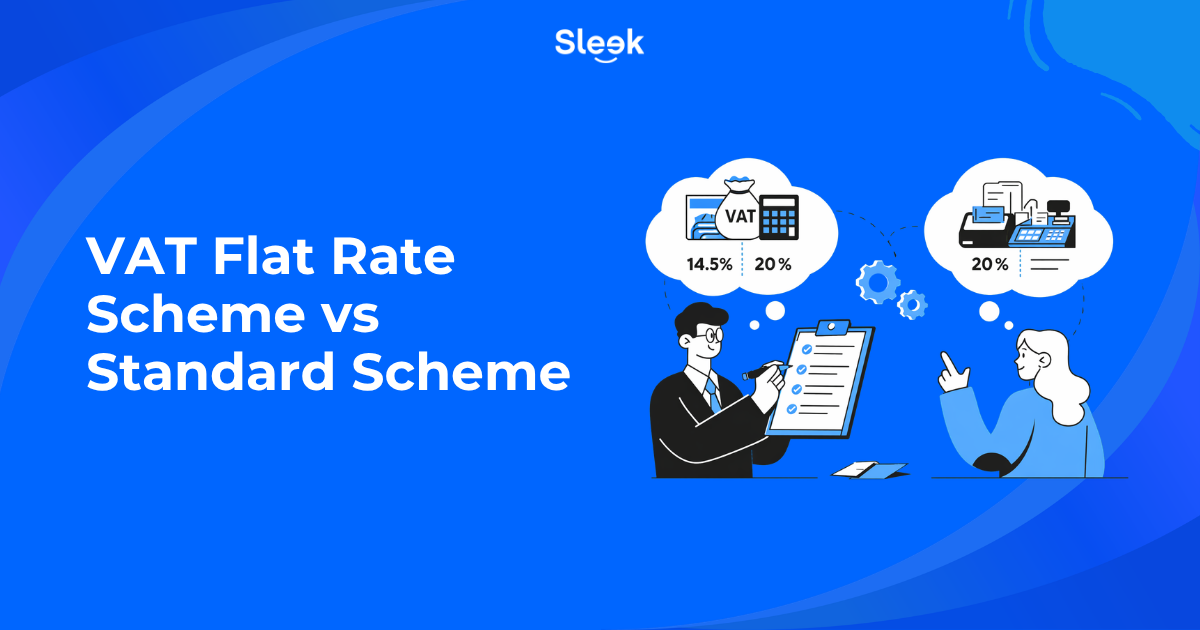











- VAT is usually calculated by multiplying the net price by 1.20 for 20% VAT or 1.05 for 5% VAT.
- To remove VAT from a gross price, divide by 1.20 or 1.05 depending on the VAT rate.
- UK businesses need accurate VAT calculations for pricing, invoices, and VAT returns.


How to reduce VAT is a common question for UK business owners trying to protect margins without creating compliance risk. Managing VAT returns properly can help reduce avoidable VAT costs, improve cash flow, and keep your business aligned with HMRC requirements.
This guide will focus on legal, practical ways to lower your VAT burden through better registration decisions, smarter use of schemes, accurate record-keeping, and timely reclaims. It will also make clear where VAT savings come from actual liability reduction and where they come from stronger cash-flow management.

1. Review whether VAT registration is still the right fit
One of the first ways to think about how to reduce VAT is to check whether your current VAT position still makes commercial sense. If your turnover has changed, your customer mix has shifted, or your margins are tighter than they used to be, your registration status may need a review.
For some businesses, staying registered is clearly the right move because it allows them to reclaim VAT on costs. For others, especially where turnover has dropped, reviewing options like VAT deregistration may be worthwhile.
If you are not yet registered, you also need to weigh up whether registration will genuinely help the business. This guide on registering for VAT is a useful starting point before making that call.
2. Choose the VAT scheme that works best for your business
The scheme you use can have a direct impact on both your VAT bill and your cash flow. That is why VAT optimization is not just about claiming more back, but also about using the structure that best matches how your business operates.
For example, some businesses benefit from the Flat Rate Scheme because it simplifies reporting and can reduce the amount of VAT paid in certain cases. Others are better suited to the Cash Accounting Scheme if they regularly wait a long time for customers to pay.
The key point is simple: do not assume the scheme you started with is still the best one now. Reviewing this regularly can reveal easy wins that improve both efficiency and margin.
3. Reclaim all eligible VAT on business expenses
A lot of businesses overpay VAT simply because they do not reclaim everything they are entitled to. If you want to know how to reduce VAT legally, this is one of the most practical places to start.
You should review recurring expenses such as software, equipment, professional services, travel, and other operating costs. Even small missed claims can build into a meaningful loss across the year.
If your reclaim process is inconsistent, start by tightening it up with a clear review of how to claim a VAT refund in the UK. You should also keep an eye on specialist areas where reclaim rules can be less straightforward, such as VAT on staff entertainment.
4. Improve invoicing and record-keeping to avoid missed VAT claims
Poor admin quietly increases VAT costs. If invoices are incomplete, records are messy, or transactions are coded inconsistently, it becomes much easier to miss reclaim opportunities or submit inaccurate figures.
That is why invoicing discipline matters so much. Your team should have a clear process for issuing compliant invoices, storing supplier invoices, and keeping digital records organised throughout the VAT period.
If your current process is still manual or inconsistent, it is worth reviewing how to create an invoice and making sure your systems support Making Tax Digital for VAT. For the formal invoicing requirements, you can also refer to the official GOV.UK guidance on invoices.

Review your last three VAT returns line by line against your biggest expense categories. Missed reclaims are often hiding in repeat costs, not one-off purchases.
5. Time large purchases carefully to improve VAT recovery
Sometimes the best VAT optimization move is not changing what you buy, but changing when you buy it. The timing of large purchases can affect when you reclaim VAT and how much pressure your next VAT return puts on cash flow.
This can be especially useful if your sales fluctuate during the year. Bringing forward a qualifying business purchase into a lower-revenue period can improve the position on the next return and help offset VAT due.
Timing will not change the underlying rules, but it can make a noticeable difference to how manageable your VAT cycle feels. It is one of the simplest ways to make VAT planning more deliberate rather than reactive.
6. Get expert advice before small VAT issues become expensive ones
Many businesses try to reduce VAT by making isolated tweaks without first checking whether their overall VAT treatment is right. That is where mistakes happen.
If your business has unusual transactions, mixed supplies, sector-specific rules, or any uncertainty around what can and cannot be reclaimed, specialist support can save far more than it costs. The right advice can help you spot weak processes, avoid penalties, and identify savings that generic guidance misses.
It is also worth checking the official GOV.UK guidance on VAT rates and thresholds when reviewing your wider setup. Used properly, expert support turns VAT optimisation into a repeatable process rather than a guess.
Disclaimer: The preceding information is not legal advice. This content is aimed to provide general guidance. For more formal or legal advice, contact Sleek directly.


450,000
businesses worldwide.



satisfaction rate from
16,000 surveyed clients.
FAQs on how to reduce VAT
What is VAT and how does it work?
VAT is a tax charged on most goods and services sold by VAT-registered businesses. Businesses add VAT to their sales, collect it from customers, and then pay HMRC the difference between the VAT they charge and the VAT they can reclaim on eligible costs. If you are new to the system, this guide on registering for VAT is a useful place to start.
What is input VAT vs output VAT?
Input VAT is the VAT your business pays on eligible purchases and expenses. Output VAT is the VAT you charge customers on your sales. Your VAT bill is usually the difference between the two. Understanding that gap is essential if you want to reduce errors, improve reclaims, and manage your VAT returns more efficiently.
Are there VAT exemptions for certain goods or services?
Yes, some goods and services are exempt from VAT, while others may be zero-rated. That matters because exempt supplies are treated differently from taxable sales, and this can affect whether you can reclaim VAT on related costs. Businesses should be careful not to confuse exemption with zero-rating, as the reporting and reclaim implications are not the same.
What are zero-rated vs exempt supplies?
Zero-rated supplies are still taxable for VAT purposes, but the VAT rate charged is 0%. Exempt supplies are outside normal VAT charging in a different way, and they can restrict your ability to reclaim VAT on related costs. The distinction is important if your business has mixed income streams, because it can affect both your reporting and your overall VAT position.
How can international trade affect VAT obligations?
Selling goods or services across borders can change where VAT is due, whether you need overseas registrations, and which evidence you need to keep. Import VAT, export treatment, and cross-border service rules can all affect your obligations. If your business also trades online, working with an ecommerce accountant can help you stay compliant while avoiding costly mistakes.
View more
How do partial exemption rules work?
Partial exemption rules apply when a business makes both taxable and exempt supplies. In that case, you may only be able to reclaim some of the VAT on shared business costs, rather than all of it. This can become complex quickly, especially where overheads support multiple activities, so businesses should review calculations carefully and document the method they use.
Can I backdate VAT claims?
In some cases, yes. HMRC allows VAT-registered businesses to reclaim VAT on certain goods and services bought before registration, provided the purchases meet the rules and you still have the right records. The time limits and conditions are specific, so it is worth checking your position carefully. This guide on how to claim a VAT refund in the UK can help.