



Expert Accounting & Year-Round Peace of Mind – now at ‎‎ 20% OFF! .
Expert Accounting & Year-Round Peace of Mind – now at ‎‎ 20% OFF! . Offer ends in:
Days
Hours
Min
Secs
United Kingdom
Singapore
Australia
Hong Kong

What Is a Dividend? Meaning, How It Works, and How It’s Taxed in 2026

Illustration showing a group of shareholders receiving dividend payments from a company, representing how dividends work.
By
|
|
7 mins read
|
Published:
|
Updated:
Illustration showing a group of shareholders receiving dividend payments from a company, representing how dividends work.

Wondering how dividends affect your take-home pay?

document.addEventListener("DOMContentLoaded", function() { document.getElementById('accountingplans1')?.addEventListener('click', function() { fireEvent('UK_CTA_Page_Resource_Affordable_accouting_clans_1'); }); document.getElementById('contactus1')?.addEventListener('click', function() { fireEvent('UK_CTA_Page_Resource_Contact_us_1'); }); });

What is a dividend? It’s one of the simplest ways to earn money from owning shares in a company. When a business makes a profit, it can choose to share some of that profit with its shareholders through a dividend payment.

Getting professional help with your accounting services ensures your dividend payments are handled correctly and you stay compliant with HMRC rules.

Dividends can be a smart way to take income from your own limited company or to grow your investment returns. But the rules, tax rates, and allowances can be confusing—especially when they change each year.

In this guide, you’ll learn:

  • What dividends are and how they work
  • The different types of dividends
  • How dividend tax works in 2025
  • When dividends might be better than salary

What is a dividend?

A dividend is a portion of a company’s profits paid to its shareholders as a reward for investing in the business. It’s one of the main ways people earn money from owning shares.

Dividends can be paid in cash or additional shares, depending on what the company decides. For limited company owners, this is often the most tax-efficient way to pay yourself — after your company has already paid Corporation Tax. 

Here’s a simple example: If your company makes £20,000 in post-tax profits, you could choose to distribute £10,000 as dividends to shareholders. Each shareholder then receives a share based on their percentage of ownership.

Wondering how dividends affect your take-home pay?

Why do companies pay dividends?

Companies pay dividends to share profits with the people who invest in them. It rewards shareholders for supporting the business and shows that the company is financially stable.

Here are some of the main reasons companies choose to pay dividends:

  • To reward shareholders for their investment and loyalty
  • To demonstrate consistent profitability
  • To attract and retain investors who prefer regular income
  • To distribute surplus cash that is not needed for reinvestment

For directors of small limited companies, dividends can also be an effective way to take income once Corporation Tax has been paid. 

Used correctly, they can help reduce your overall tax burden. You can learn more about this in our guide on the tax-efficient way to withdraw money.

How do dividends work?

When a company makes a profit, the directors can decide to distribute part of it as dividends. The process is simple once you understand the steps involved.

Here’s how it works:

  1. Confirm available profits. Dividends can only be paid from post-tax profits.
  2. Hold a board meeting. Directors record their decision to declare a dividend.
  3. Issue dividend vouchers. Each shareholder receives a written statement showing the date, company name, shareholder name, and dividend amount.
  4. Make the payment. Cash dividends are usually transferred directly into the shareholder’s account.

Dividends can be paid at any time of the year, but most companies choose quarterly or annual payments. Some businesses also pay interim dividends during the year and a final dividend once accounts are complete.

What are the main types of dividends?

Dividends come in a few different forms, each paid out in its own way. Understanding these helps you decide how to manage or report your dividend income correctly.

Cash dividends

Illustration explaining a cash dividend, showing how shareholders receive direct payments from company profits.
An overview of how companies distribute profit to shareholders through cash dividends.

The most common type. The company transfers money directly into shareholders’ accounts based on how many shares they own. It provides a steady source of income and is often paid quarterly or annually.

Stock dividends

Illustration explaining a stock dividend where shareholders receive extra company shares instead of cash.
A visual guide to how stock dividends increase shareholder ownership without reducing company funds.

Instead of paying cash, the company issues additional shares to shareholders. This increases the number of shares owned but not the overall value. It’s often used by companies that want to reinvest profits rather than part with cash.

Special dividends
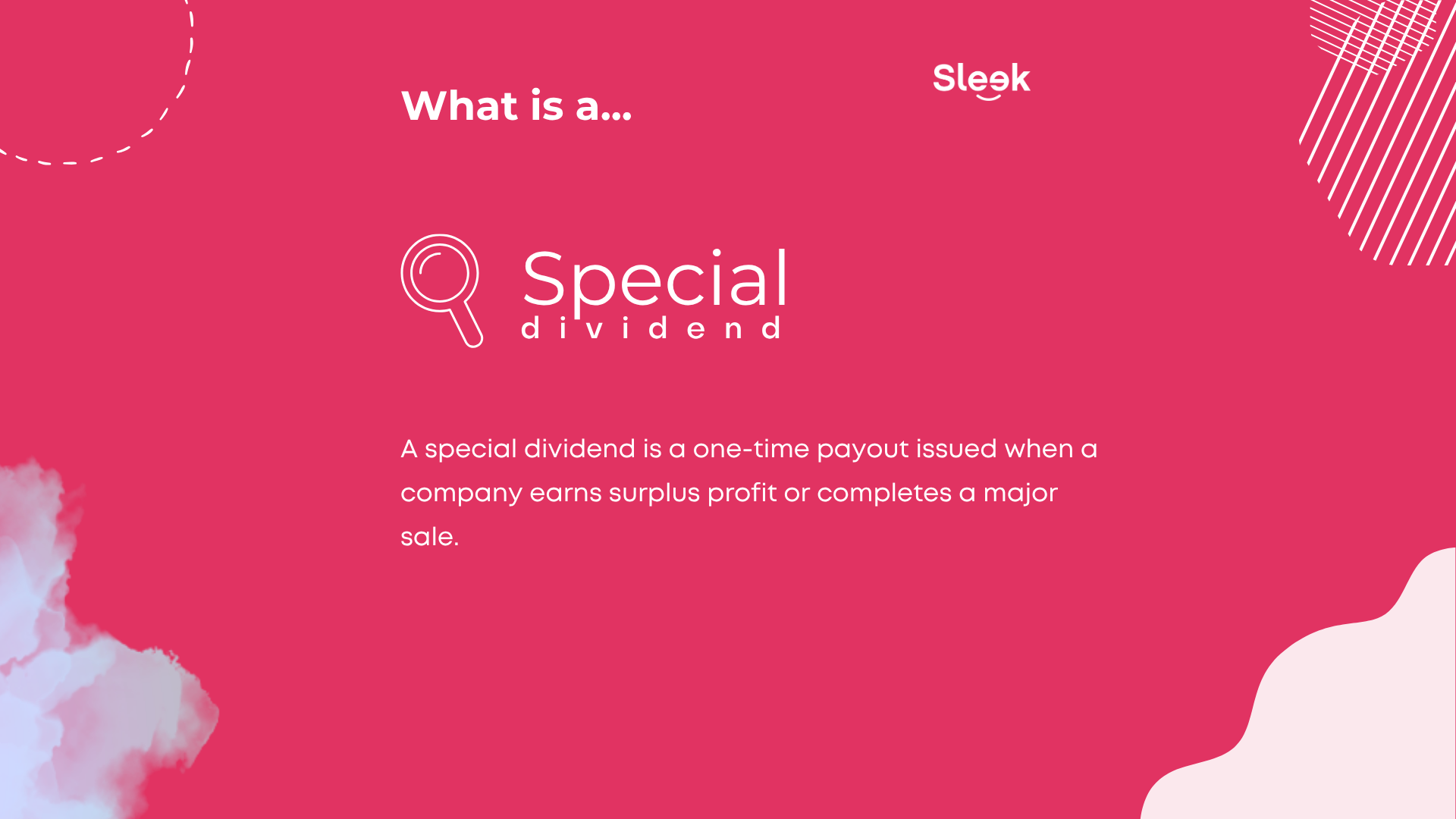
Illustration defining a special dividend as a one-time payout from surplus company profits or a major sale.
A quick guide to what makes a special dividend different from regular dividend payments.

A one-off payment that usually happens when a company makes an unusually high profit or sells a major asset. These aren’t part of the regular dividend cycle and are often larger than normal payments.

Dividend reinvestment plans (DRIPs)
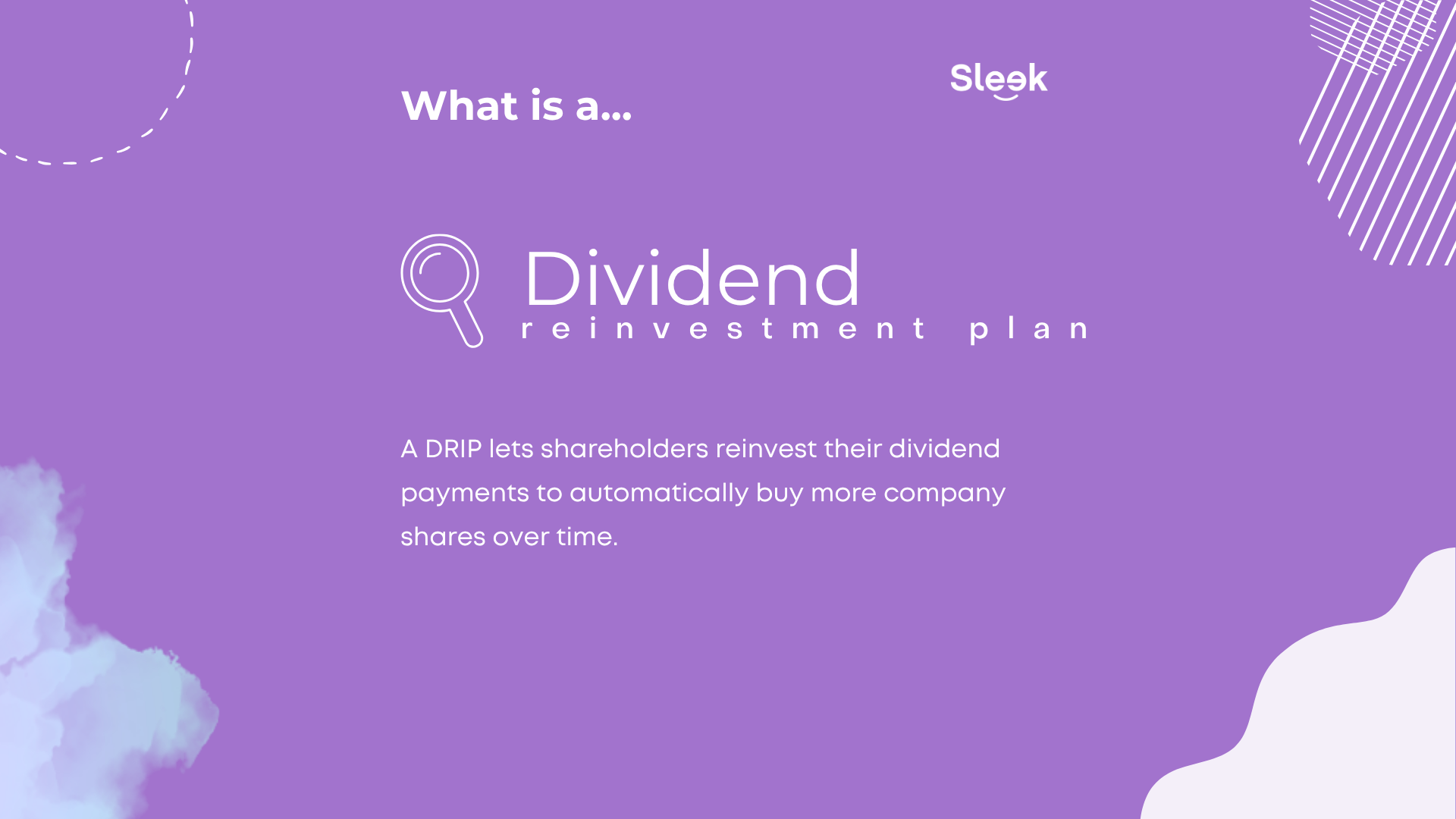
Illustration explaining a Dividend Reinvestment Plan, showing how shareholders reinvest dividends to buy more shares automatically.
A simple breakdown of how DRIPs help shareholders grow their investment by reinvesting dividend income.

Some companies let shareholders automatically reinvest dividends to buy more shares, helping them build wealth gradually. You can read more about the tax on dividends in the UK to understand how reinvested profits are treated by HMRC.

What is dividend yield and why does it matter

The dividend yield shows how much a company pays its shareholders in dividends compared to its share price. It’s a quick way to measure potential income from an investment.

You calculate it by dividing the annual dividend per share by the current share price, then multiplying by 100 to get a percentage.

Example:
If a company pays £2 per share in annual dividends and its share price is £20, the dividend yield is 10% (£2 ÷ £20 × 100).

A higher yield might look attractive, but it’s not always a sign of a healthy company. Sometimes, a high yield happens because the share price has fallen. That’s why investors usually consider dividend yield alongside company performance, growth potential, and payout history.

If you’re thinking about investing through your own company, our guide on what is a share premium explains how shares and dividends connect in limited companies.

How are dividends taxed in the UK in 2025

Dividends are taxed separately from your salary or self-employment income. The amount you pay depends on how much you earn overall and which Income Tax band you fall into.

Everyone gets two allowances that affect how much tax you owe on dividends:

  • Personal Allowance: £12,570 – the amount of income you can earn before paying any tax.
  • Dividend Allowance: £500 – the amount of dividend income you can receive tax-free, on top of your Personal Allowance.

Once your dividend income exceeds these allowances, tax is charged at the following rates for the 2025/26 tax year:

Income band

Taxable income range

Dividend tax rate

Basic rate

Up to £50,270

8.75%

Higher rate

£50,271 – £125,140

33.75%

Additional rate

Over £125,140

39.35%

Dividends received inside an ISA or pension are tax-free and don’t count towards your allowances.

If you’re unsure which band you fall into, see our guide on the UK tax brackets. It explains how income from salary, dividends, and other sources fits together when calculating your total tax bill.

Dividends vs salary: what’s more tax-efficient?

Many company directors pay themselves tax-smartly by using a mix of salary and dividends. Each method has benefits depending on your profit level and tax band.

Salary counts as a business expense, so it reduces your company’s Corporation Tax bill. The trade-off is that you’ll pay Income Tax and National Insurance on it.

Dividends come from profits after tax, so they don’t lower Corporation Tax, but they aren’t subject to NICs. Once your company is earning steady profits, dividends usually become the more efficient option.

Payment type

When tax is paid

Subject to NICs?

Tax efficiency

Salary

Before Corporation Tax

Yes

Moderate

Dividends

After Corporation Tax

No

High

Many directors take a small salary (to keep state benefit eligibility) and then pay themselves the rest as dividends. The exact balance depends on how much profit your company makes and your personal tax bracket. You can find more on how this works in our guide on how much tax you pay as a company director.

How Sleek helps you manage dividends and stay compliant

Handling dividends can seem straightforward, but getting the details right matters. From making sure profits are available to keeping proper records, compliance is key.

Sleek’s accountants handle everything from registering your company to preparing accurate dividend vouchers and tax filings. You’ll know exactly how much you can distribute and when, without risking an HMRC penalty.

We also help directors plan the most tax-efficient combination of salary and dividends so you keep more of your profits while staying compliant.

Once you understand how dividends work, you can focus on growing your business instead of worrying about paperwork.

Want to take dividends with confidence and stay compliant? Speak to a Sleek accountant today and get your profit strategy right from the start.

FAQs on what is a dividend

A dividend is money a company pays its shareholders from its post-tax profits. It’s how investors earn income from owning shares.

A dividend stock is a company that pays regular dividends to its shareholders, often chosen by investors seeking steady income rather than short-term growth.

A scrip dividend, also called a share dividend, gives shareholders extra shares instead of cash. It increases your ownership in the company without reducing its cash reserves.

It’s the actual payout made to shareholders on the dividend payment date, either as cash or new shares, after the dividend has been approved.

Dividend yield shows how much a company pays out in dividends each year compared to its share price. For example, a £1 dividend on a £20 share equals a 5% yield.

There’s no fixed rule, but many investors look for a yield between 3% and 6%. A very high yield can mean the company’s share price has dropped, which may indicate higher risk.

In the UK, all dividends are taxed under dividend tax rates rather than standard income tax, so “qualified dividend” is a term mainly used in US tax systems.

Dividend income is the total amount of money you receive from company dividends during a tax year. It must be reported to HMRC if it exceeds your annual allowances.

The payout ratio shows how much of a company’s profit is paid out as dividends. A lower ratio can mean the company is reinvesting more for growth, while a higher one means it’s returning more cash to shareholders.

Disclaimer: The preceding information is not legal advice. This content is aimed to provide general guidance. For more formal or legal advice, contact Sleek directly.