










- You can register a UK limited company from anywhere in Europe without being a UK resident, and the process is usually completed online within 24 hours.
- A UK registered office address is mandatory, and EU and non-EU founders both need one since a home address abroad will not qualify.
- Identity verification at Companies House is now compulsory for all new directors and PSCs, so EU and non-EU applicants must verify before or at incorporation.




Knowing how to register a UK company from Europe comes down to a few online steps, and you can do it without being a UK resident, citizen, or ever visiting. You can incorporate a UK company with Sleek in around 24 hours, paying the £100 Companies House digital fee plus a UK registered office from roughly £50 to £150 a year.
The formation steps are identical for EU and non-EU founders. What differs is the tax and trade treatment after Brexit, which this guide covers in full.
A UK entity gives you limited liability, a Companies House number, and credibility with banks and platforms across Europe and beyond.

Can a non-resident register a UK company from Europe?
A non-resident can register a UK company from Europe, and there is no requirement to live in the UK, hold British citizenship, or visit at any point. The application and legal duties are the same for everyone, wherever they are based.
You need at least one director and one shareholder, and the same person can hold both roles. This means you can form a company on your own from any European country.
The company is governed by the Companies Act 2006 regardless of where its directors live. Non-resident directors carry exactly the same legal responsibilities as UK-based ones.
How much does it cost to register a UK company from Europe?
Registering a UK company from Europe costs £100 for standard online incorporation at Companies House, with a same-day digital service available for £156. These statutory fees are fixed by the government and are the same for residents and non-residents.
The Companies House fee is rarely your only cost. As a European founder, you will almost always need a UK registered office address, and most founders use an accountant for ongoing filings.
Here is a realistic first-year budget for a non-resident.
Item | Typical cost | Notes |
Companies House incorporation | £100 | One-off, paid online |
UK registered office address | £50 to £150/year | Mandatory, covered below |
Service address for directors and PSCs | £20 to £50/year | Keeps your home address off the public register |
Annual confirmation statement | £50 | Paid each year from February 2026 |
Accounting and compliance | £300 to £1,200/year | Varies by turnover and activity |

Budget for the registered office and accounting from day one rather than treating them as optional. Both are recurring, and skipping the address requirement will stop your application entirely.
Do you need a UK address to register a company from Europe?
You do need a UK address to register a company from Europe, because every UK company must have a registered office in its country of incorporation. A residential address in Germany, France or any other European country will not satisfy this requirement.
The registered office is the official address for statutory mail from Companies House and HMRC, and it appears on the public register. It must be a physical UK address, not a PO box.
European founders typically solve this with a registered office service in London, Manchester or another UK city. Many formation and accounting providers, Sleek included, can supply a compliant UK address as part of setup.
You can also use a separate service address to keep your residential address abroad off the public record. Our guide to the different types of UK company address explains how each one works.
How to register a UK company from Europe: step by step
Registering from Europe follows the same online route as a UK-based founder, with extra attention on the address and identity verification. The process below is fully remote.
- Choose a unique company name. Check it against the Companies House register and avoid names that are the same as or too similar to existing ones, plus sensitive or protected words.
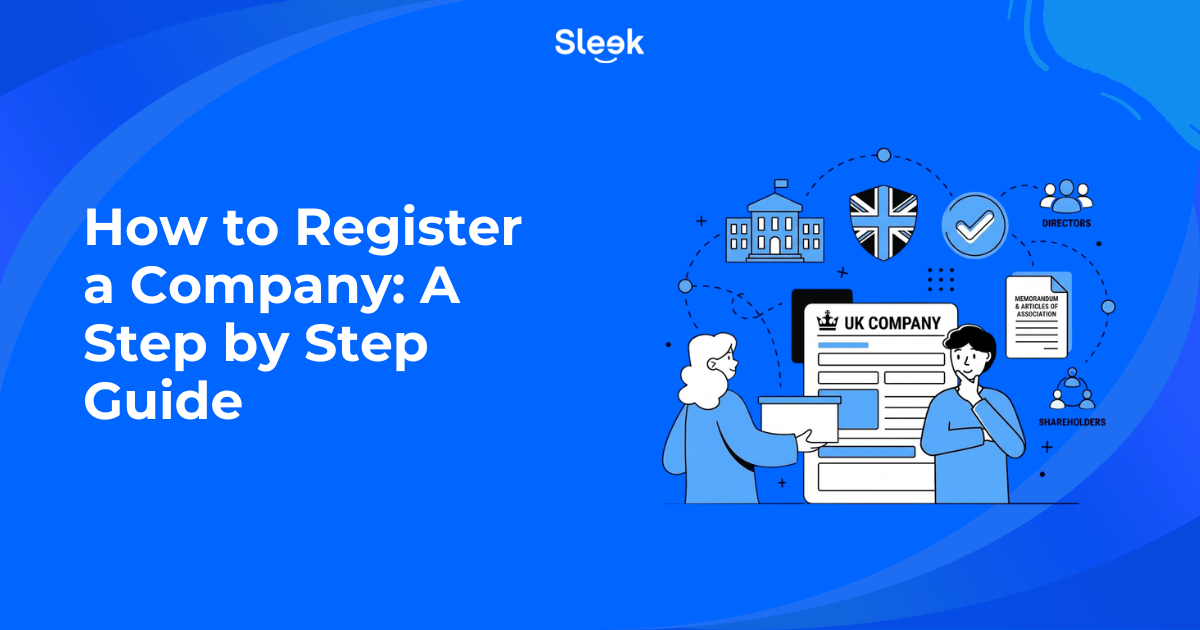
- Appoint at least one director and one shareholder. You can be both. Provide each person’s name, date of birth, nationality, occupation, and residential and service addresses.
- Secure a UK registered office address. This is mandatory and must be a physical UK address.
- Set your share structure and PSC details. A common setup is 100 shares at £1 each. Anyone with more than 25% control is a person with significant control.
- Complete identity verification. All new directors and PSCs must verify their identity, covered in the next section.
- Submit the application and pay the fee. File online and pay £100, or £156 for same-day processing.
- Receive your certificate of incorporation. Most online applications are approved within 24 hours.
After incorporation, you move on to tax registration and banking, which both have non-resident wrinkles worth understanding.
Do EU founders need to verify their identity at Companies House?
EU founders do need to verify their identity, because identity verification is now compulsory for all new directors and people with significant control. This applies to every new appointment regardless of nationality or where the person lives.
The requirement became mandatory for new directors and PSCs on 18 November 2025. Existing officeholders have until 18 November 2026 to verify through GOV.UK One Login or an authorised agent.
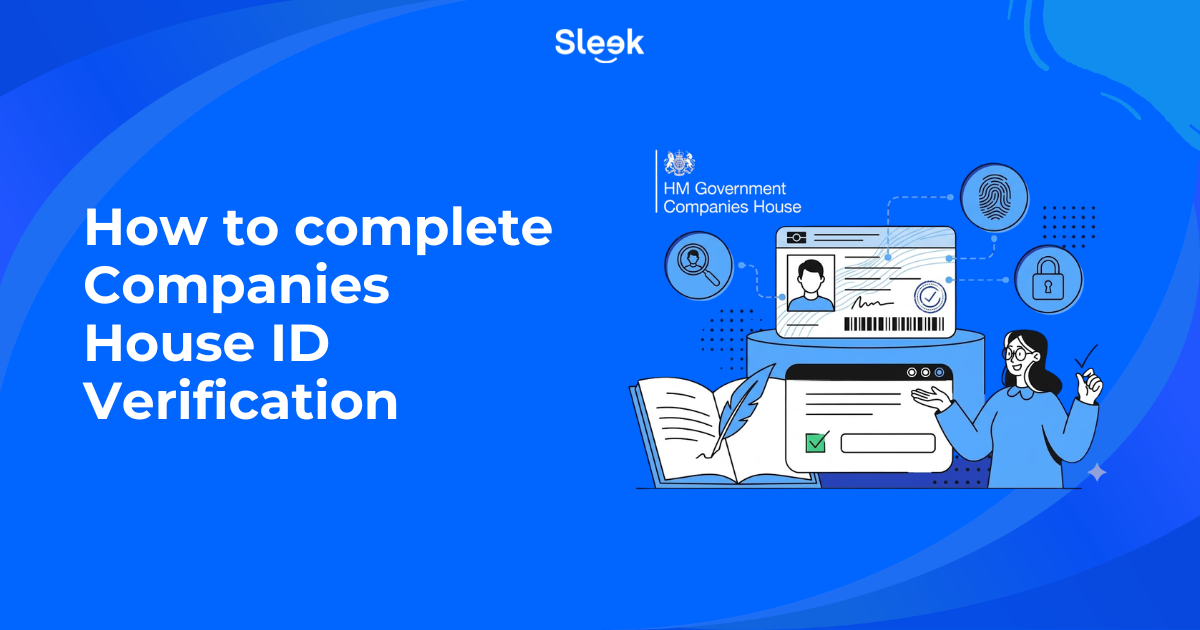
For European founders, verification is done remotely. You can verify directly through GOV.UK One Login, or through an Authorised Corporate Service Provider that handles the check on your behalf. Our explainer on Companies House identity verification walks through the routes in detail.
How do you register for tax after forming a UK company from Europe?
After forming your company, you register for Corporation Tax with HMRC within three months of starting to trade, and this duty applies to non-resident directors in exactly the same way. Missing the window can trigger penalties, so it is one of the first jobs after incorporation.
VAT is separate and only becomes compulsory once your taxable turnover passes £90,000 in any rolling 12-month period. You can register voluntarily below that threshold to reclaim input VAT, which can suit founders with UK supplier costs.
The core registrations to plan for are:
- Corporation Tax, registered with HMRC within three months of trading.
- VAT, compulsory above the £90,000 threshold and optional below it.
- PAYE, only if you employ staff or pay yourself a UK salary.
- An EORI number, if you move goods between the UK and the EU.
Our guide to registering for Corporation Tax covers the HMRC process and deadlines for new companies.
What is the difference for EU versus non-EU European founders?
The company formation process is identical whether you are based inside or outside the EU, so an applicant from Spain and one from Switzerland or Norway follow the same Companies House steps. The genuine differences sit in trade and tax treatment, not in how you incorporate.
Since Brexit, the UK treats all EU and non-EU European countries as third countries for trade purposes. That means the old intra-EU VAT simplifications no longer apply automatically to UK-EU sales.
Area | EU-based founder | Non-EU European founder |
Formation steps | Identical | Identical |
Director eligibility | No residency needed | No residency needed |
Goods to and from the UK | Customs declarations and EORI needed | Customs declarations and EORI needed |
Double tax treaty | UK has treaties with all EU states | UK has treaties with most non-EU European states |
In practice, the post-Brexit position has converged. An EU founder no longer gets smoother UK trade access than a non-EU one, which surprises many applicants who expect EU membership to still ease the path.
Can you open a UK business bank account from Europe?
You can open a UK business account from Europe, though traditional high street banks often require a UK visit or UK-resident signatories. Many non-resident founders use digital banking platforms that onboard remotely instead.
Providers such as Wise and Tide are commonly used by European founders because they accept remote applications and handle multi-currency payments. Expect enhanced due diligence checks, so prepare your passport, proof of address and a clear business description.
A UK account is not legally required to incorporate, but it makes invoicing UK clients and receiving GBP far simpler. Our guide on setting up a business bank account covers what to prepare.
What ongoing compliance applies to a non-resident UK company?
A non-resident UK company carries the same annual obligations as any UK company, including a confirmation statement, annual accounts and a Corporation Tax return. Living in Europe does not reduce or change these duties.
Be aware of one tax trap specific to non-resident directors. If your company is centrally managed and controlled from your home country, that country may treat it as tax-resident there under “place of effective management” rules. This can create dual residency, so it is worth professional advice early.
Your recurring filings include:
- Confirmation statement, filed annually for £50.
- Annual accounts, filed with Companies House.
- Corporation Tax return (CT600), filed with HMRC.
Late filings risk penalties and, eventually, strike-off, so a non-resident company’s Corporation Tax position is best mapped out before you start trading.
How Sleek helps with registering a UK company from Europe
Forming the company is the easy part. Keeping it compliant from another country, across Corporation Tax, VAT, confirmation statements and annual accounts, is where most European founders want support.
Sleek handles the full lifecycle: incorporation, a UK registered office, tax registrations and ongoing filings, all managed remotely. That removes the time-zone friction and guesswork of dealing with HMRC and Companies House yourself.

Disclaimer: The preceding information is not legal advice. This content is aimed to provide general guidance. For more formal or legal advice, contact Sleek directly.


450,000
businesses worldwide.



satisfaction rate from
16,000 surveyed clients.
FAQs on registering a UK company from Europe
Can an EU citizen be the sole director of a UK company?
Yes. An EU citizen can be the only director and shareholder of a UK limited company with no residency requirement. You must complete identity verification and provide a service address, which can be located anywhere in Europe. Your legal duties as a director are identical to those of a UK-based director under the Companies Act 2006.
Do I need a national insurance number to register from Europe?
No. A national insurance number is not required to register a UK company as a non-resident. Some application questions reference one, but you can select an alternative security question if you do not hold a number. You would only encounter national insurance if you later run a UK payroll for yourself or employees.
How long does it take to register a UK company from Europe?
Most online applications are approved within 24 hours, and a same-day service is available for £156. Timing can extend if identity verification is not completed promptly or if your chosen company name needs adjusting. Having your registered office, director details and verification ready in advance keeps the process fast.
Will my UK company pay tax in the UK or in my home country?
Both can apply, which is why this needs early advice. The company pays UK Corporation Tax on UK profits, but if it is effectively managed from your home country, that country may also tax it. Double tax treaties between the UK and European states usually prevent paying twice on the same income.
Can I register a UK company from a non-EU European country like Norway or Switzerland?
Yes. Founders from any European country, inside or outside the EU, can register a UK company on identical terms. The formation steps, fees and director rules do not change based on EU membership. The only practical differences arise in trade and customs treatment, which apply broadly to all non-UK countries post-Brexit.
View more
Do I need a UK phone number or business premises to incorporate?
No. You need a UK registered office address for statutory mail, but not UK business premises or a UK phone number. Your trading activity can be based anywhere. A registered office service satisfies the legal address requirement without you renting physical space in the UK.
Is a UK company still worth forming after Brexit if I am in the EU?
It can be, depending on your goals. A UK company still offers limited liability, strong legal credibility and access to UK clients and banking. Brexit removed some EU trade simplifications, so weigh the customs and VAT admin against the benefits. Many European founders form one specifically to serve UK or English-speaking markets.