









- A UK company must hold at least one SIC code and can hold up to four, with the first describing its main activity.
- An out-of-date SIC code won’t change your tax bill, but it can hold up lender and insurer decisions and attract Companies House scrutiny under the Economic Crime and Corporate Transparency Act.
- SIC codes can only be updated through a confirmation statement, which costs £50 online or £110 by post and is payable once per 12-month payment period.



Your UK SIC code is the five-digit classification Companies House uses to describe what your company does, and it should match what you actually do now.
You can hold up to four codes and change them whenever you need to. An out-of-date code won’t change your tax bill, but it can affect how lenders, insurers and Companies House read your business.
Most businesses pick a code on incorporation day and never look at it again. If yours has pivoted since, the register probably hasn’t kept up, which is one of the first things Sleek’s UK accounting service checks when a new client comes on board.

Is your SIC code still right for what your company actually does?
Your SIC code should describe the activity your company carries out today, not the one you had in mind the day you registered. Businesses pivot, drop services and pick up new ones, and the register rarely keeps pace.
Companies House suggests three questions worth asking yourself:
- Are you trading? If so, does your code reflect that, rather than showing dormant (99999) or non-trading (74990)?
- Has your business activity changed? Moving into a new sector should be reflected in the code.
- Does the code actually describe what you do? A mismatch can affect lender relationships and funding eligibility.
Using a dormant or non-trading code on an actively trading company is one of the most common discrepancies Companies House sees, and one it now has the power to challenge.
What is a SIC code in the UK?
A SIC code, or Standard Industrial Classification code, is a five-digit number that tells Companies House and anyone searching the register what industry your company operates in. You choose at least one when registering a limited company, and it stays on your public record until you change it.
There are more than 600 codes on the Companies House condensed list, grouped into 21 main industry categories.
How do you check the SIC code your company is registered under?
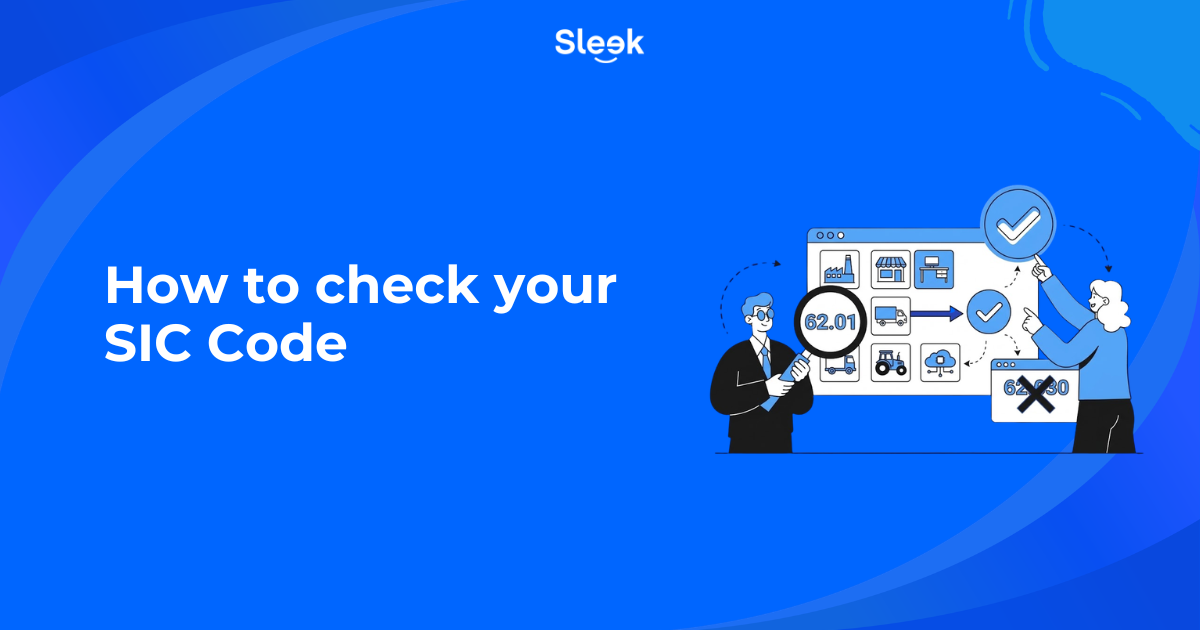
You can find your current SIC codes on the free Find and update company information service, which shows them under the nature of business heading on your company’s overview page.
- Search the service using your company name or number.
- Open the company overview page.
- Scroll to “Nature of business (SIC)” and note every code listed.
- Compare each one against what the business actually does today.
Don’t confuse your SIC code with your company registration number. The registration number is unique to your company, while a SIC code is shared by every business doing something similar.
Choosing a SIC code when nothing fits your business properly
Plenty of modern businesses don’t map neatly onto a classification system built for a different economy, so the goal is the closest honest match rather than a perfect one. Start with the official condensed list of SIC codes on GOV.UK, since only codes on that list are accepted and anything else risks a rejected filing.
If you’re stuck, search the register for companies doing roughly what you do and see how they’ve classified themselves. A coffee shop that also sells records, to use Companies House’s own example, can learn a lot from how similar businesses have described their activity.

If you trade under a brand that differs from your registered name, your SIC code still has to describe the activity, not the brand. The same goes for trading under a different name.
Avoid reaching for a catch-all code just because it’s easier to justify. Vague classifications are precisely what attracts questions.
Can a UK company have more than one SIC code?
A UK company must hold at least one SIC code and can hold up to four. The first code you list should describe your main business activity, with the others covering genuine secondary activities.
Number of codes | When it makes sense |
1 | A single clear activity, which covers most small companies |
2 to 3 | Genuinely distinct revenue streams, such as consultancy plus software |
4 | Diversified businesses trading across several sectors |
Four is the ceiling, not a target. Adding codes for activities you’ve considered but never started makes the record less accurate, not more thorough.
What an inaccurate SIC code actually affects
An inaccurate SIC code won’t land you with a fine of its own, but it feeds into decisions made about your company by people you’ll never speak to.
Accounts classification and dormancy
Your code sits alongside your filed accounts on the public record. If it says 99999 or 74990 while your accounts show turnover, the two tell different stories, and that inconsistency is visible to anyone looking. It’s worth understanding how trading and non-trading status works for Corporation Tax before you assume dormancy is just a label.
Lender, insurer and bank decisions
Lenders and funding bodies use SIC codes to assess eligibility, so a mismatch can delay or complicate an application. Insurers price on sector too. The same applies when opening a business bank account, where the code helps the bank decide what kind of business it’s taking on.
Companies House scrutiny under ECCTA
The Economic Crime and Corporate Transparency Act gives Companies House the power to challenge, reject or remove information that looks incorrect, inconsistent or misleading, and that includes SIC codes. In practice, a mismatch can mean filing rejections or delays while the discrepancy is investigated.
This is the part most business owners miss, and it’s why Sleek’s accountants check SIC accuracy as part of onboarding rather than leaving it to the annual scramble.
Does your SIC code change how much tax you pay?
Your SIC code has no effect on how much Corporation Tax your company pays. Tax is calculated on taxable profits, so thecurrent Corporation Tax rates of 19% up to £50,000 and 25% above £250,000 apply the same way whichever code sits on your record.
What the code can do is shape how HMRC reads a claim. An R&D relief claim from a company coded to software development looks expected. The same claim from a company coded to retail invites a closer look.
How do you change your SIC code in the UK?
You change a SIC code by filing a confirmation statement with the updated codes included, and there’s no separate form for it. The SIC section sits in the additional information part of the statement, where you can add, replace or remove codes.
Filing costs £50 online or £110 on paper, and the fee is payable once per 12-month payment period. File a second statement inside the same payment period and you won’t pay again, which makes correcting a code mid-year cheaper than most people expect.
You can wait for your next statement or file early, though filing early resets your review period. The mechanics are covered in our guide to the confirmation statement filing process.
How Sleek helps with SIC codes
Most SIC code problems aren’t complicated, they’re just invisible until a lender, insurer or Companies House query brings them to the surface. A quick check of what’s on the register against what your business actually does takes minutes and saves a lot of explaining later.
Sleek’s in-house accountants review your company record as part of onboarding, so a code that stopped matching reality two pivots ago gets picked up before it costs you anything.

Disclaimer: The preceding information is not legal advice. This content is aimed to provide general guidance. For more formal or legal advice, contact Sleek directly.


450,000
businesses worldwide.



satisfaction rate from
16,000 surveyed clients.
FAQs on SIC codes in the UK
Is there a SIC code for a holding company?
Yes. Most non-financial holding companies use 64209, covering the activities of other holding companies not elsewhere classified. If the company also provides management or administrative services to its subsidiaries, 70100 for head office activities may fit better. Check both against the condensed list before filing, and read our guide to holding company structures if you’re weighing one up.
Can I remove a SIC code my company no longer uses?
Yes. When you file a confirmation statement, the SIC section lets you add, replace or delete codes. Leaving an old code on the record isn’t neutral, because it tells lenders and insurers you still trade in that sector. If you’ve exited an activity completely, remove the code rather than letting it sit alongside your current one.
What’s the problem with using a catch-all SIC code like 82990?
82990 covers other business support service activities not elsewhere classified, and it’s one of the most overused codes on the register. It tells nobody anything useful about your company. If a more specific code exists for what you do, use it. Vague codes are exactly the inconsistency Companies House now looks at, and they weaken funding applications.
Do I have to tell Companies House straight away when my business activity changes?
No. There’s no separate deadline for a SIC code change, because the code is only updated through the confirmation statement. You can wait until your next one is due, or file early if you’d rather the register caught up sooner. Filing early resets your review period, so check your confirmation date first.
Does my SIC code need to match my VAT or Corporation Tax registration?
No. Your SIC code sits on the Companies House register and has no formal link to your VAT registration or Corporation Tax record. That said, HMRC does use SIC data when it risk-profiles claims. A company claiming R&D relief under a retail or catering code is more likely to attract questions than one coded to software development.
View more
Can my SIC code affect my company’s credit profile?
Yes. Credit reference agencies use SIC codes to group companies by sector and benchmark them against sector norms. A code that misrepresents what you do can put your company in the wrong peer group, which affects the scoring. It won’t change your filed accounts, but it changes how those accounts get read.
Does my SIC code show on the public register?
Yes. Your SIC codes appear on your company’s public record at Companies House under the nature of business heading, alongside your registered office, directors and filing history. Anyone can see them for free, including customers, suppliers, lenders and competitors. That visibility is the main practical reason to keep them accurate rather than treating them as a formality.